
Are your customers complaining about sliding activewear? High return rates from rolling waistbands ruin your brand reputation. Fix these six design flaws to build high-performance leggings that stay put.
Leggings roll down primarily due to pattern issues like straight-cut waistbands without curved contraction1, improper sizing, low-recovery fabrics with poor spandex quality2, or double-layer waistbands lacking internal elastic. Brands can fix this by optimizing patterns, adding 0.5–1cm elastic bands3, or utilizing internal silicone grips4.
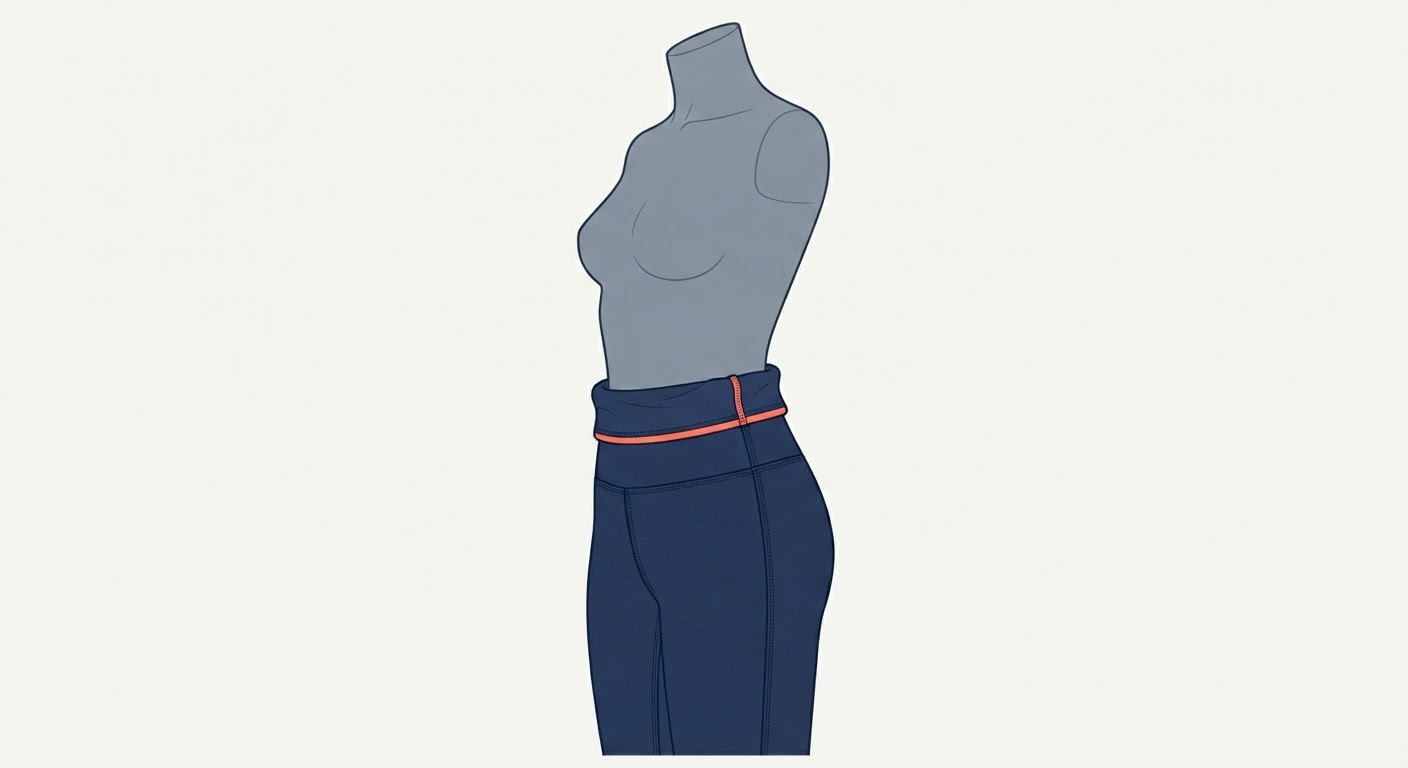
As the founder of LJ Garment, I have spent years helping activewear brands transition from concept to collection. When product developers like Sarah Chen share their frustration over rising return rates, we look directly at the engineering of the waistband. Let us explore the key design problems and how to solve them in production.
Is Your Waistband Pattern Too Straight?
A straight-cut waistband fails to match human curves. This mismatch causes the fabric to bunch, gap, and slide down during movement, frustrating your active customers.
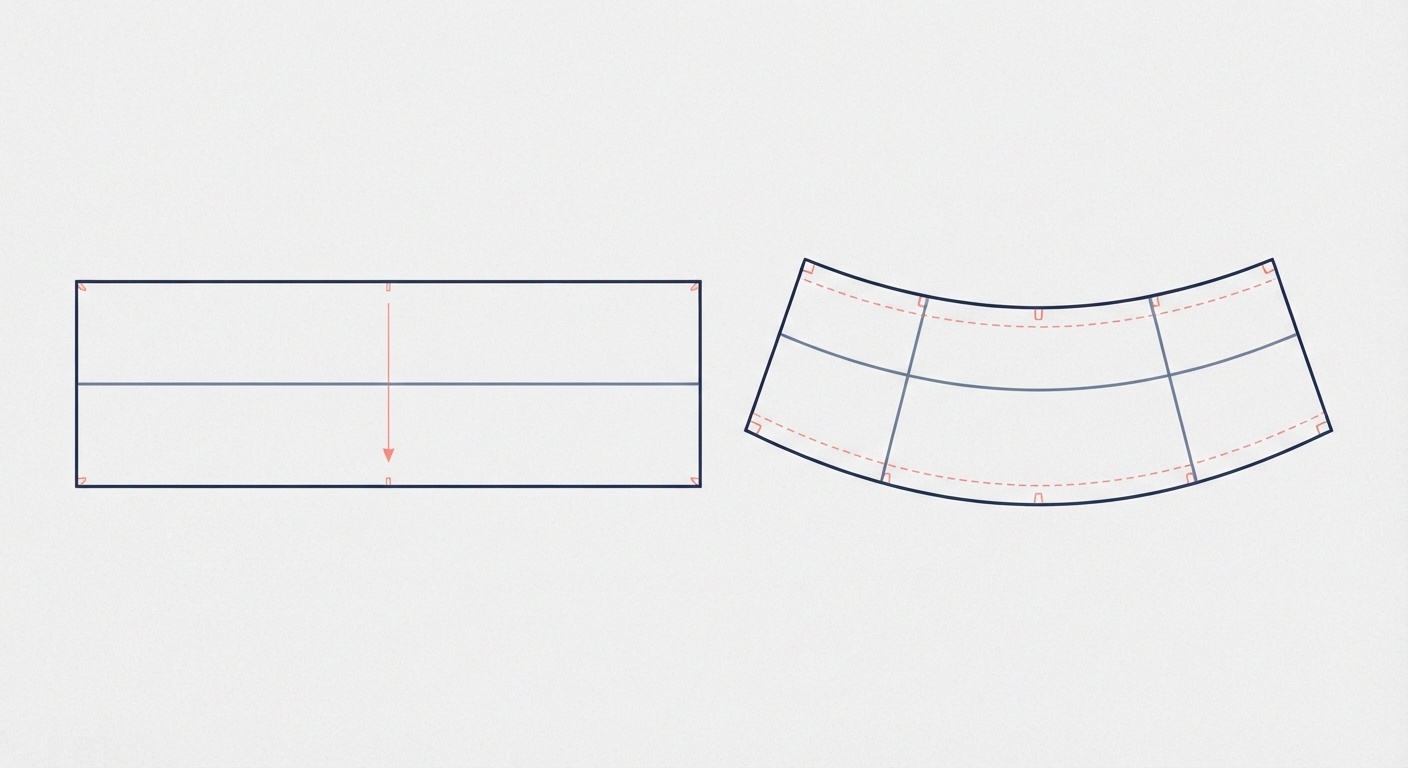
To prevent rolling, waistbands must feature curved contraction rather than a simple straight cut. A curved pattern mimics the natural narrowing of the human waist, ensuring the fabric hugs the torso securely without slipping.
The Importance of Curved Contraction
When I work through this decision with Sarah, I first pull out our pattern blocks to show the difference between a straight-cut waistband and a curved waistband. A straight band sits flat on a table but gaps when wrapped around a three-dimensional body. By introducing curved contraction into the pattern, the top edge of the waistband is slightly smaller than the bottom edge, matching the natural transition from the hips to the waist.
Pattern Adjustments and Sizing
If the waist pattern is too large or too small, it will roll. If it is too small, the body pushes it down; if too large, gravity takes over. We recommend testing your patterns across your entire size run5 rather than just grading up mathematically from a medium sample.
| Design Option | Best For | Pros | Cons |
|---|---|---|---|
| Straight Cut | Low-cost lounge pants | Easy to sew, low cost | High risk of rolling down |
| Curved Contraction | High-performance leggings | Hugs body curves, stays secure | Requires skilled pattern makers |
Does Your Double-Layer Waistband Lack Elastic?
Relying solely on self-fabric tension often leads to a loose fit. Without internal support, the waistband quickly stretches out and rolls down during workouts.
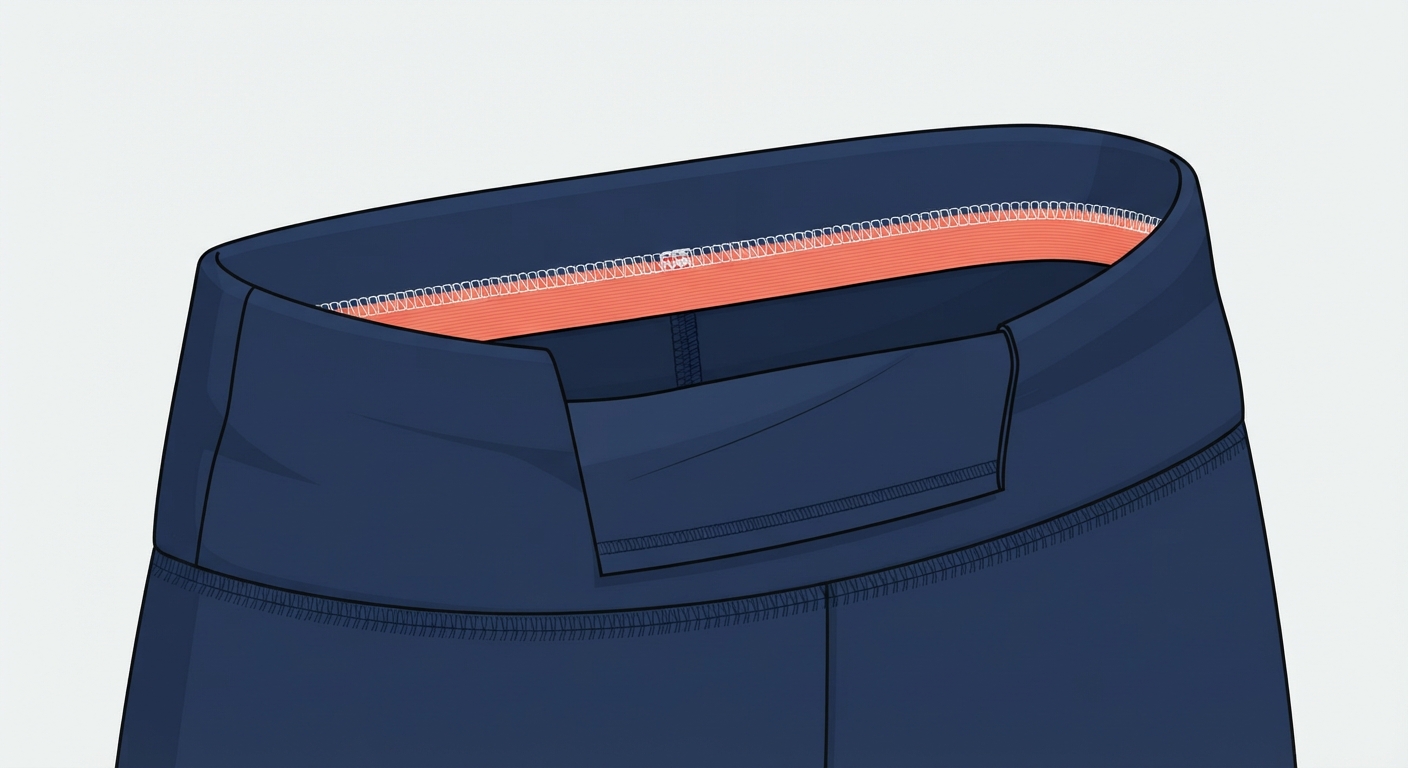
Double-layer waistbands without separate elastic easily roll if the fabric fit is not perfect. Adding a 0.5cm to 1cm elastic band inside the top seam provides the necessary recovery to keep the leggings anchored to the waist.
Why Self-Fabric Isn’t Always Enough
Many activewear brands prefer a clean, seamless look at the top of the waistband. To achieve this, designers often use a double layer of the main body fabric. However, unless the fabric has exceptional recovery, this design is highly prone to rolling.
Implementing Internal Elastic
I helped Sarah compare the clean-edge look with an elastic-reinforced version. By inserting a narrow 0.5–1cm elastic band inside the top edge of the double-layer waistband, we provide a subtle anchor point. This small addition does not ruin the sleek aesthetic but dramatically improves performance. It holds the leggings in place without digging into the skin.
| Construction Type | Performance Level | Cost Impact | Production Lead Time |
|---|---|---|---|
| Plain Double-Layer | Low to Medium | Low | Standard |
| Reinforced with 0.5-1cm Elastic | High | Minimal increase | Standard |
Is Your Fabric Lacking Spandex Quality and Recovery?
Cheap fabrics lose their shape after a few stretches. When your leggings lose their recovery power, they inevitably sag and roll down, driving away loyal customers.
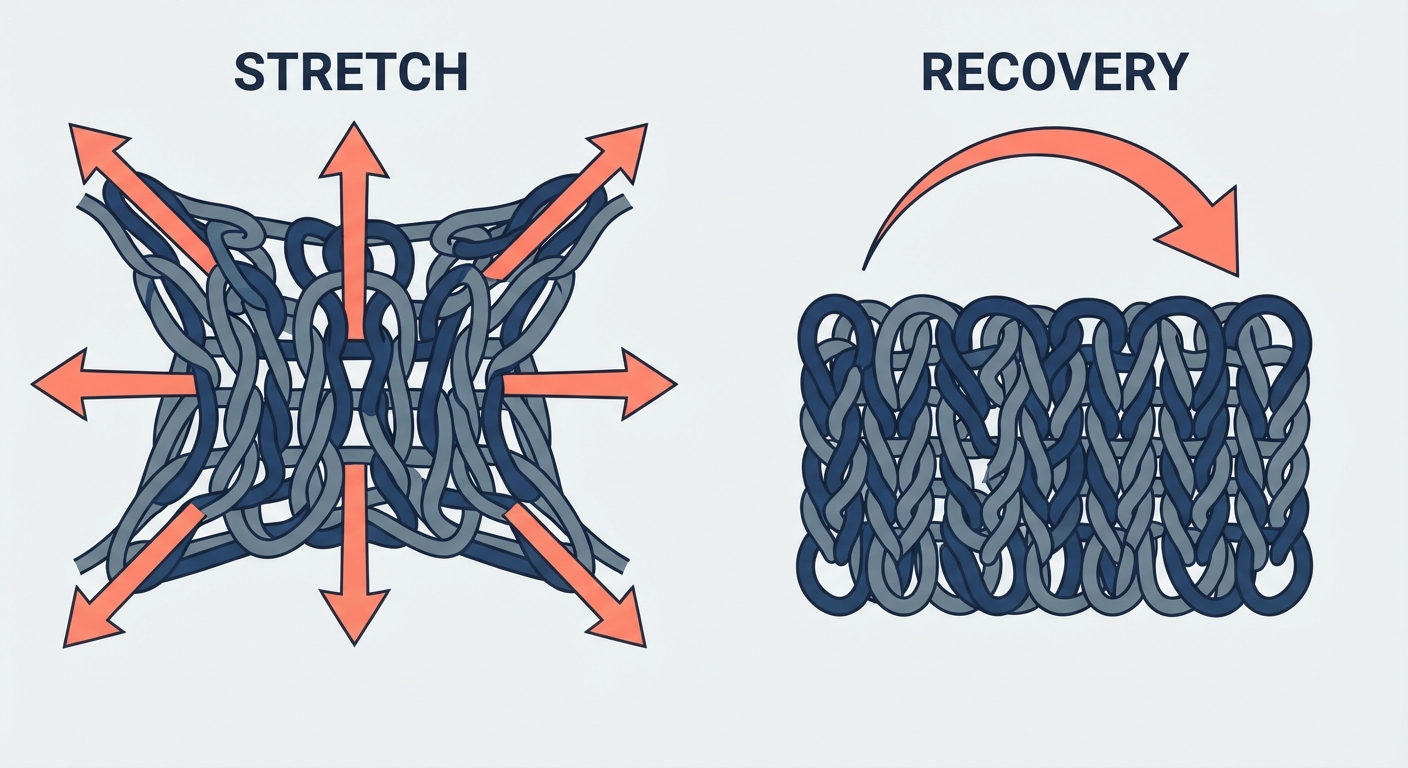
Leggings roll down when the fabric has an insufficient spandex ratio or poor-quality spandex. High-quality fabric must offer excellent recovery—the ability to snap back to its original shape after being stretched.
Evaluating Spandex Quality and Recovery
Not all spandex is created equal. Two fabrics can have the exact same fiber composition on paper, yet perform completely differently in real life. Poor-quality spandex degrades quickly under heat, sweat, and washing, leading to a baggy waistband that slips down.
The Heavyweight Fabric Trap
Another common mistake is using high-weight fabrics that lack sufficient extension. Brands often assume heavier fabrics mean better quality, but if the material cannot stretch and recover adequately, the weight actually pulls the leggings down.
When sourcing materials, we advise brands to test the recovery rate. A simple stretch-and-release test during the sampling phase will reveal if the fabric can maintain its grip over time.
| Fabric Issue | Impact on Fit | Solution |
|---|---|---|
| Low Spandex Ratio | Poor stretch and hold | Increase spandex quality or ratio |
| High Weight, Low Extension | Pulls waistband down | Swap to high-recovery, balanced fabric |
Is the Fabric Too Smooth Against the Skin?
Super-slick fabrics feel amazing but offer zero resistance. Without friction, the waistband easily slides down the body during high-impact movements.
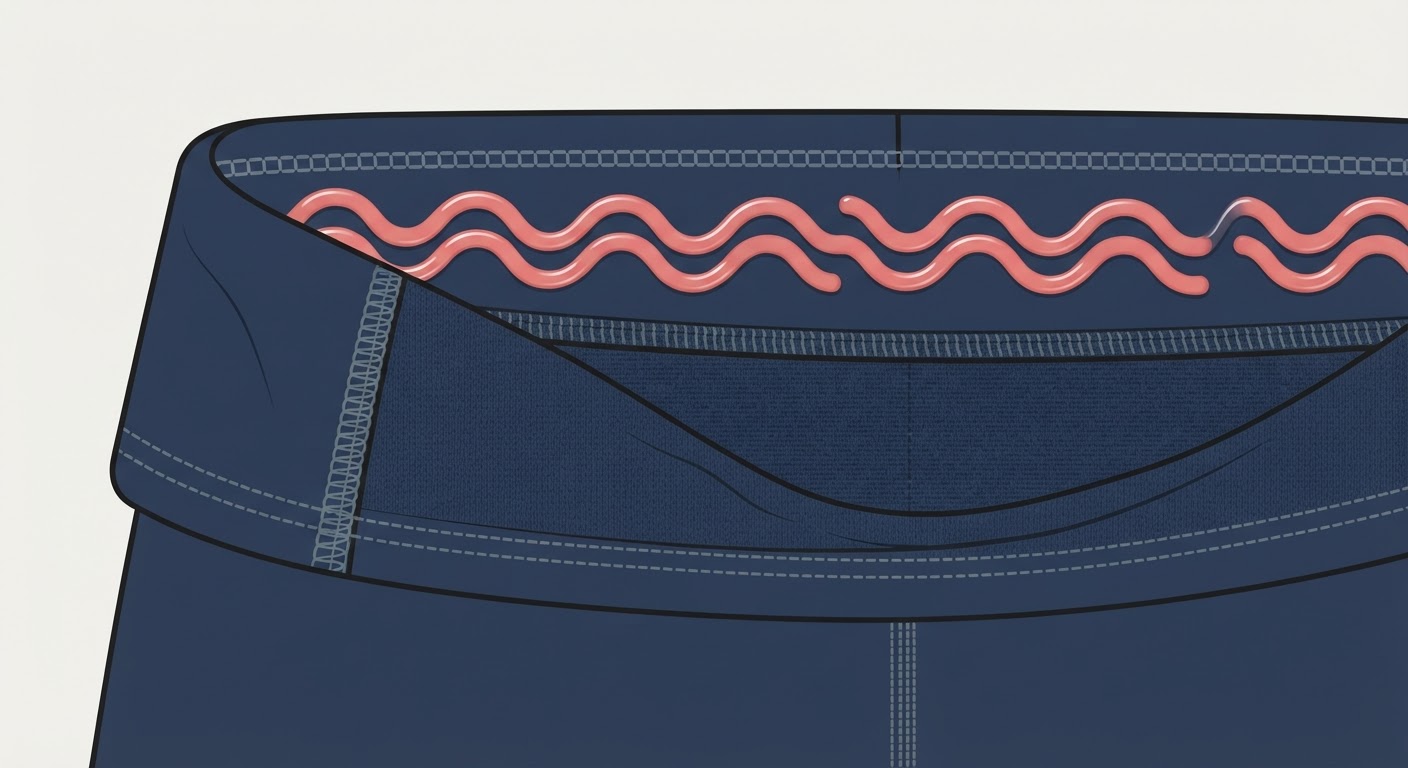
When fabric is too smooth, it lacks the necessary friction to grip the skin. Adding internal silicone anti-slip strips or silicone dots inside the waistband creates the required resistance to keep the leggings secure.
The Friction Dilemma in Activewear
Butter-soft, brushed fabrics are incredibly popular for yoga and casual wear. However, for high-intensity training, these smooth surfaces can work against the wearer. Without enough friction against the skin, the waistband simply slides down the torso.
Adding Silicone Solutions
To solve this without changing the beloved hand-feel of the outer fabric, we can apply silicone solutions to the inside of the waistband. This can be done via a continuous silicone strip or strategically placed silicone dots.
When Sarah and I reviewed this option for her brand’s high-impact line, we carefully balanced the added cost against the performance benefit. It is a highly effective solution for performance-focused collections.
| Grip Method | Best Application | Feel on Skin | Cost Factor |
|---|---|---|---|
| Silicone Strip | High-impact running | Secure, firm grip | Moderate |
| Silicone Dots | Gym training, yoga | Breathable, light grip | Moderate |
| No Grip (Fabric only) | Everyday leisure | Soft, unrestricted | Low |
Conclusion
Eliminating waistband roll-down requires optimizing patterns, choosing high-recovery fabrics, and utilizing internal elastic or silicone grips to ensure your activewear performs flawlessly.
-
straight-cut waistbands without curved contraction – Understanding how waistband shape affects fit helps brands design leggings that stay up. Source: Slam-dunk Contour Waistband: The Secret of Keeping Your Pants Up – Part 1 | Itch to Stitch. ↩
-
low-recovery fabrics with poor spandex quality – Clarifies how fabric composition affects stretch, recovery, and waistband stability. Source: What Is Fabric Recovery? Why It Matters for Stretch Fabrics. ↩
-
adding 0.5–1cm elastic bands – Provides practical design guidelines for internal elastic sizing for durability and comfort. Source: Why Do Leggings Roll Down? 6 Reasons + How to Fix It | Vitality. ↩
-
internal silicone grips – Describes friction-enhancing solutions that improve garment grip without altering feel. Source: Silicone Dot vs Nano-Grip Tape Anti-Slip Hem Innovations | 2026 Guide. ↩
-
testing your patterns across your entire size run – Explains the importance of accurate sizing in preventing waistband roll down. Source: Why Your Clothing Samples Look Different Than Expected (And How to Fix It) | Maya Omrani. ↩