
Evaluating Leggings Opacity: A Fabric and Fit Guide for Brands
I previously worked for a fabric manufacturer as a merchandiser. This background helps when analyzing how raw material structures translate into finished textiles. I later entered garment manufacturing. Product development teams can analyze how a fabric behaves when cut, sewn, and stretched over a human body.
Why Static Fabric Tests Fail to Predict Opacity
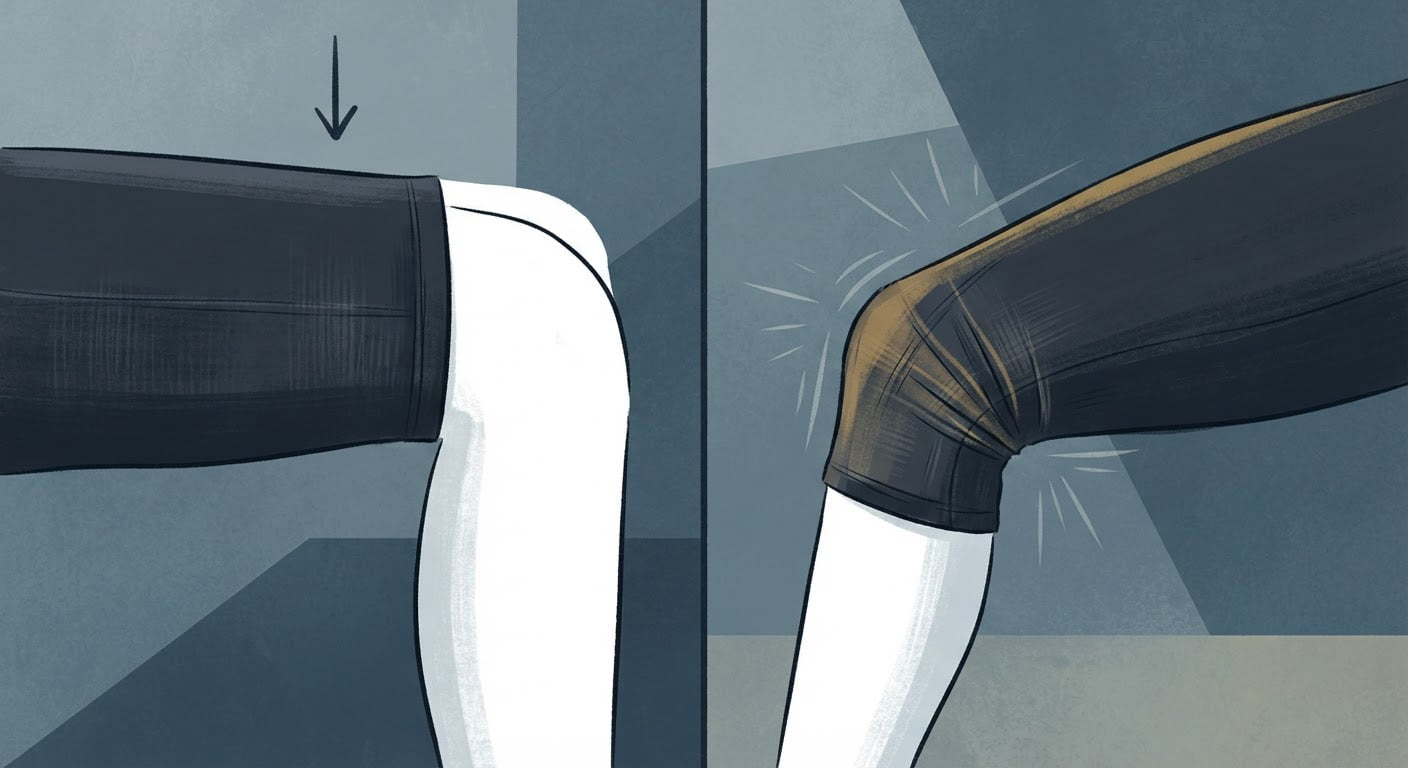
When a person squats, lunges, or bends, the fabric over the glutes and thighs stretches multi-directionally. This tension forces the knit loops to open. Confirm that the yarn elasticity and knit density1 align with the design requirements during sample evaluation. A static bench test, which evaluates fabric lying flat on a table, cannot replicate this dynamic strain.
To understand how different fabric constructions behave under tension, product teams should compare the structural characteristics of common knits:
| Fabric Construction | Knit Structure | Opacity Review Under Tension | Stretch and Recovery Review |
|---|---|---|---|
| Interlock Knit | Double-knit construction with smooth surfaces on both sides. | Review opacity under representative stretch during sample approval. | Review stretch and recovery against the target fit. |
| Single Jersey | Single-knit construction with distinct face and back sides. | Check opacity under multidirectional tension during sampling. | Review stretch and dimensional recovery against the target fit. |
| Warp Knit (Tricot) | Zigzag knit pattern running along the fabric length. | Check opacity under representative stretch during sampling. | Review recovery and durability against the product specification. |
When evaluating high-stretch blends, such as nylon-spandex or polyester-spandex, product teams should compare the recovery performance of the elastane2 alongside the base weight. If the fabric stretches easily but lacks the power to recover, the knit loops remain permanently distended during movement, resulting in visible transparency.
The Role of Pattern Engineering in Reducing Fabric Strain
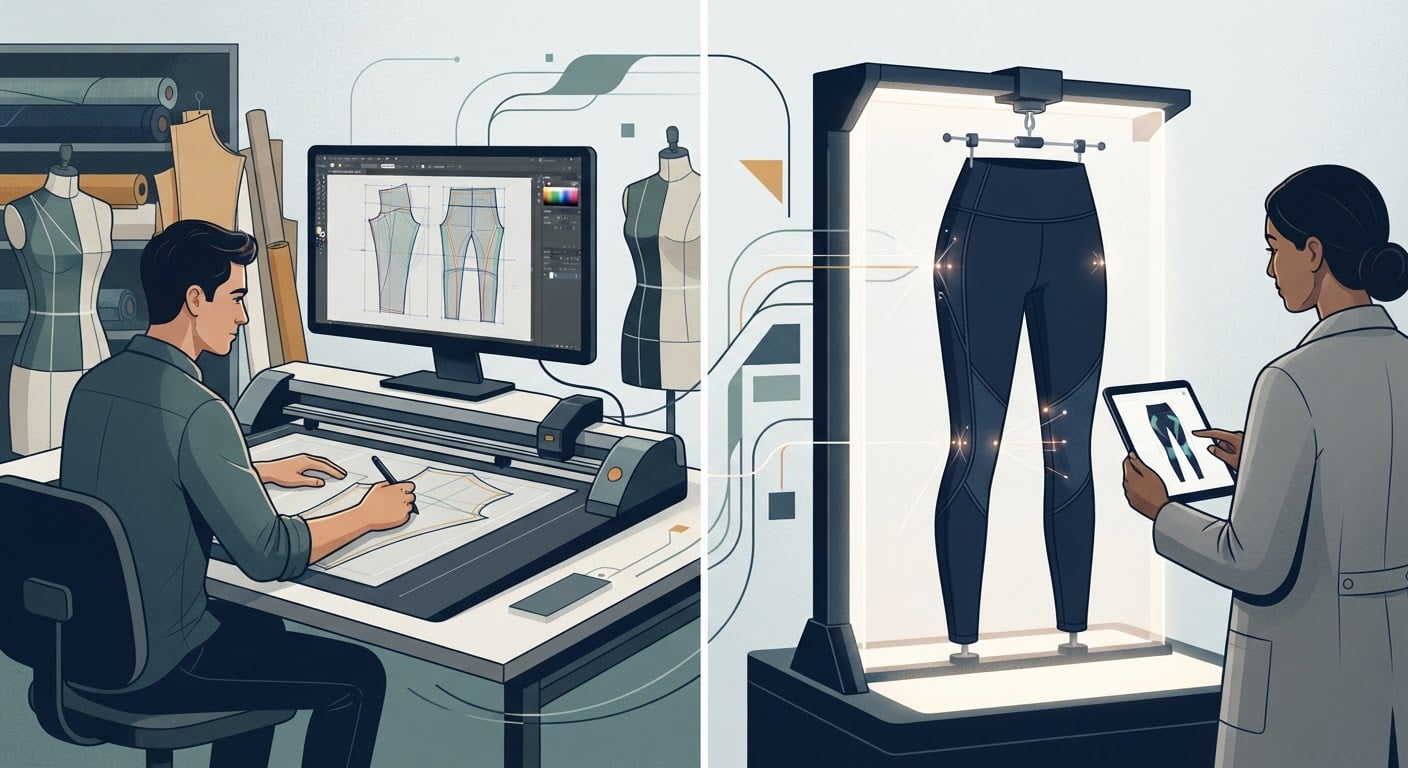
Pattern ease3 and sizing specifications influence how much a fabric stretches to accommodate the body. If a pattern has limited ease in the hip and seat measurements, the fabric may experience higher tension. This strain can cause the knit structure to open up, which makes it important to verify opacity during fit sessions.
To mitigate this, product teams can implement several construction adjustments:
- Gusset Integration: Adding a triangular or diamond-shaped crotch gusset redistributes stress away from the central seams, reducing fabric pull across the seat.
- Ergonomic Seam Placement4: Curved back yokes and flatlock seams can be positioned to follow the natural contours of the body, sharing the tensile load across multiple fabric panels.
- Grainline Alignment: Aligning the direction of maximum fabric stretch with the areas of maximum body expansion helps manage localized stretching.
By balancing fabric selection with pattern engineering, brands can work to maintain desired fabric weights while verifying opacity.
Managing Opacity in Light-Colored Activewear
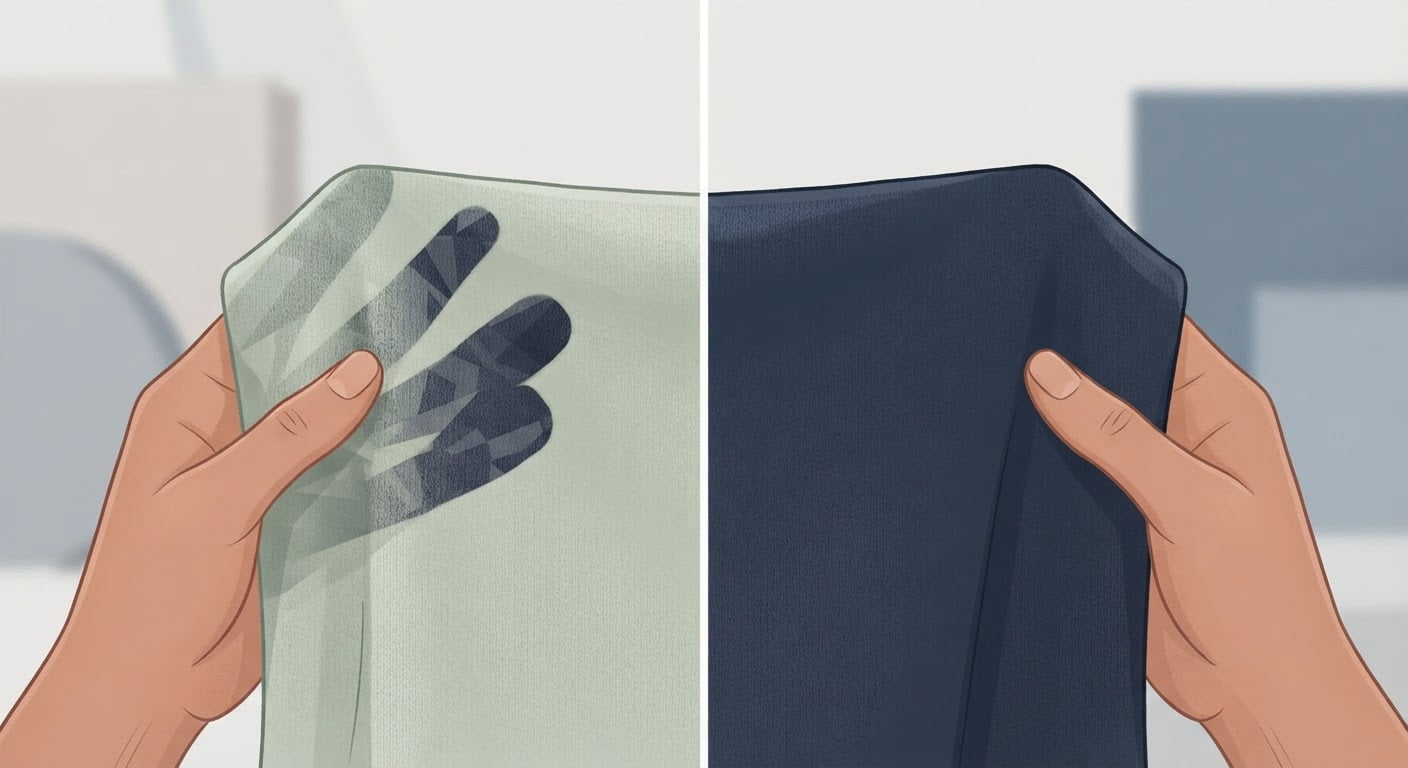
A fabric specification that achieves desired opacity in black or navy may perform differently when dyed white or light pink, which should be verified. This difference occurs because dark dyes saturate the fibers and help block light transmission, whereas light pigments do not provide the same level of coverage.
When developing light-colored activewear, product teams can consider several manufacturing strategies:
- Increase Knit Density (Not Just GSM): Request a tighter knit gauge5 from the mill. This packs more needles into the same space, creating a more compact loop structure that resists opening under tension.
- Double-Layering: For areas like the waistband or back yoke, utilizing a double-layer construction is an option to evaluate for opacity.
- Yarn Selection: Utilizing full-dull yarns6, which contain titanium dioxide (a whitening and delustering agent), helps scatter light and reduce fabric shine and transparency.
Standardizing Your Internal Quality Control Protocols

To build a reliable testing protocol, product teams should transition from static fabric evaluations to movement-based wear testing. I recommend the following framework during the sampling and pre-production phases:
- Implement Movement-Based Testing: Do not approve a sample based on dress-form presentation alone. Have wear-testers perform deep squats, lunges, and forward bends.
- Standardize the Testing Environment: Conduct all opacity evaluations under bright, overhead lighting that mimics retail or gym environments. Poor lighting can easily mask transparency issues.
- Evaluate Across the Full Size Range: Fabric strain varies significantly between a size Small and a size Extra-Large. Consider evaluating fit models or testers across the size spectrum to verify opacity across different sizes.
- Check Undergarment Contrast: Test the leggings with high-contrast undergarments (such as patterned or dark colors) underneath to establish a clear baseline for opacity.
When reviewing performance claims, verify them under the actual order and approval conditions. Before granting bulk production approval, confirm the specific opacity requirements with your manufacturing partner and compare actual samples against your established control standards.
Conclusion
Creating truly squat-proof leggings requires looking at the garment as a complete system. Fabric weight, knit construction, garment pattern, and color selection all work together to determine how a pair of leggings performs under tension. By moving away from static bench tests and adopting standardized, movement-based quality control protocols, activewear brands can confidently approve samples and deliver reliable, high-performance products to their customers.
-
knit density – Source: What Is the Best Fabric for Leggings? A Sourcing Guide for Activewear Brands. ↩
-
recovery performance of the elastane – Source: What Is Fabric Recovery? Why It Matters for Stretch Fabrics – Spandexbyyard. ↩
-
Pattern ease – Source: Sewing Ease: What It Is, How Much to Add, and Where | Sewing For A Living. ↩
-
Ergonomic Seam Placement – Source: Structural Seaming: The Architecture of SELVANE Design | SELVANE. ↩
-
knit gauge – Source: Knit Basics | CottonWorks™. ↩
-
full-dull yarns – Source: polyester full-dull and semi-dull. ↩