

I recommend establishing clear verification steps before bulk production. Before entering garment manufacturing, I worked for a fabric manufacturer as a merchandiser. From a manufacturing perspective, buyers should verify that fabric behavior, trim stability, and construction methods are aligned before bulk cutting begins. For apparel buyers, quality managers, and product teams, establishing a systematic evaluation framework helps verify production consistency.
Why Quality Control should Be a Multi-Stage Process
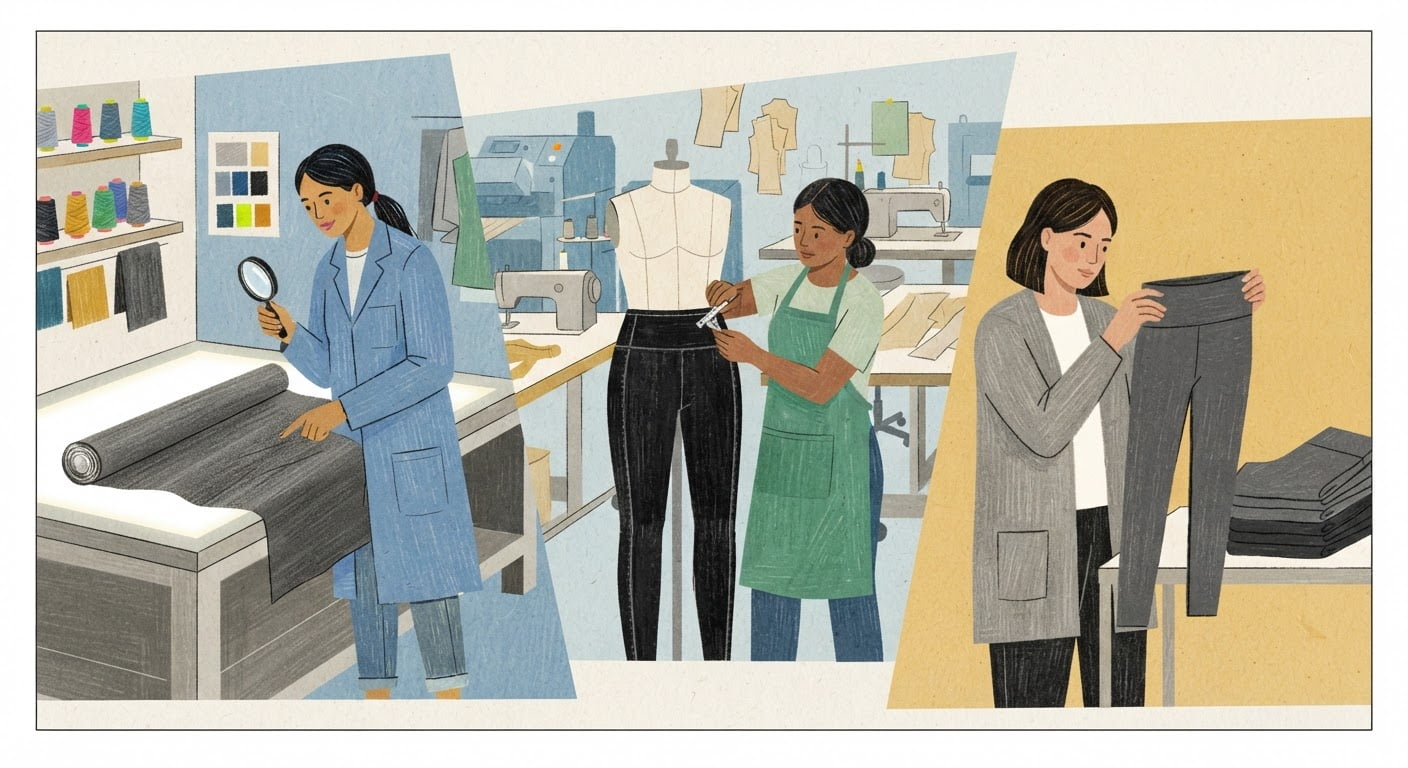
A professional quality management system relies on sequential “Quality Gates1” placed at milestones:
- Raw Material Inspection2: Verifying fabric rolls, trims, and accessories against approved standards before cutting.
- Pre-Production Sample (PPS) Approval: Confirming the final reference garment meets all design, fit, and construction specifications.
- Inline Production Checks: Inspecting the first output of the sewing lines to catch assembly errors early.
- Final Audit: Verifying the finished, packed goods against the actual project requirements before shipment.
By breaking the manufacturing cycle into these distinct stages, brands and quality teams can identify deviations early. This structured approach shifts the manufacturing relationship from reactive troubleshooting to proactive quality assurance.
Establishing Your Pre-Production Quality Gates

Standardizing the Tech Pack
Before the factory begins sewing the PPS, the product development team should align on the tech pack specifications3. This document should leave no room for ambiguity and must include:
- Detailed technical sketches and visual references.
- Precise fabric specifications (weight, fiber content, and finish).
- Complete bills of materials (BOM) for all threads, zippers, buttons, and labels.
- A comprehensive measurement tolerance chart4.
The Pre-Production Sample Checklist
When evaluating the PPS for bulk approval, the buyer’s quality team should systematically verify the sample against the tech pack. The following table outlines the essential checkpoints for this quality gate:
| Quality Gate Focus | Specific Items to Verify | Verification Method |
|---|---|---|
| Fit & Measurements | Dimensions of key points of measure (chest, length, sleeve, rise) | Measure flat on a calibrated surface; compare against tech pack tolerance limits. |
| Material & Color | Fabric hand-feel, weight, color match, and trim coordination | Compare the material and color options against the approved lab dips and master swatches before approval. |
| Construction & Seams | Seam density, stitch type, and stitch tension | Inspect seam elasticity; check for skipped stitches, puckering, or raw edges. |
| Workmanship & Details | Pattern alignment (stripes/plaids), pocket placement, and logo positioning | Visual alignment check; verify placement coordinates using a grading ruler. |
| Trims & Labels | Zipper smoothness, button security, care label content, and brand placement | Verify trim security and label text accuracy against the actual project requirements. |
Verifying Bulk Production Readiness

Assessing the Manufacturing Partner
An important step in partner selection is assessing their willingness to allow production visits or third-party inspections. Verify the relevant performance requirement through sampling or testing before approval.
During the pre-production alignment, brands should:
- Confirm the factory’s internal inspection intervals and inline checking protocols.
- Establish clear protocols for third-party quality inspectors if external audits are planned.
- Review the factory’s handling of historic defect patterns to verify their preventative measures.
Demanding Written Corrective Action Plans
If defects or deviations are discovered during the PPS evaluation or early inline checks, buyers should confirm corrective actions through written technical plans.
A written corrective action plan5 should specify:
- The root cause of the identified defect (e.g., incorrect needle type, improper machine calibration, or fabric tension issues).
- The exact technical adjustment to be made (e.g., changing stitch density or adjusting the pattern grading).
- The verification step the factory’s internal QC team will take to confirm the issue is resolved before full-scale sewing begins.
Key Product and Manufacturing Factors When Checking clothing quality
Performance and Material Testing
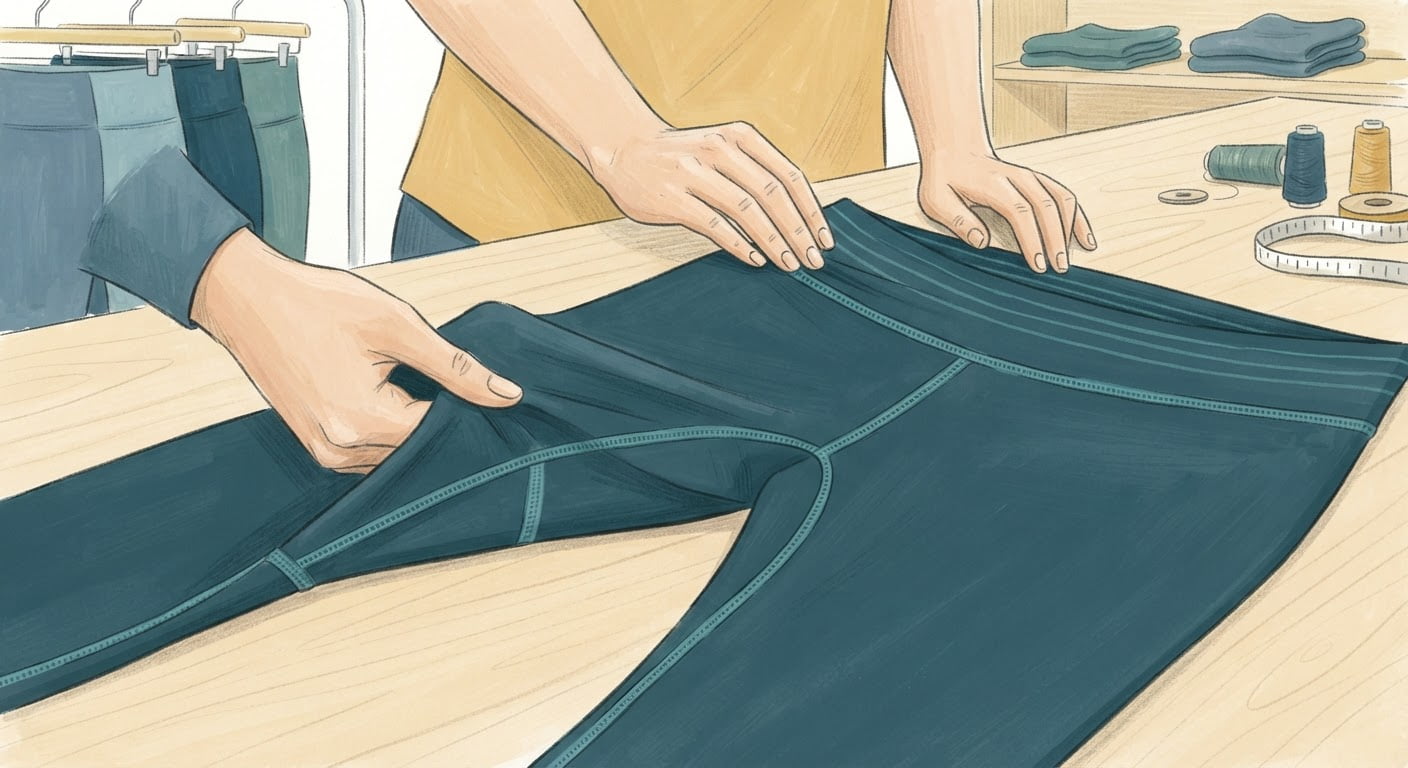
When checking clothing quality, treat performance comparisons as provisional until representative samples are tested under the buyer’s intended construction, use, and approval conditions. Fabric behavior in a laboratory setting can vary significantly from how it performs during bulk cutting, sewing, and washing.
To mitigate performance risks, buyers should verify the following material characteristics on representative fabric lots before bulk cutting:
- Dimensional Stability (Shrinkage)6: Verify how the fabric behaves during cleaning to confirm it meets the actual project tolerance limits.
- Colorfastness: Test for color bleeding, crocking (rubbing), and light exposure, particularly when combining contrasting light and dark panels.
- Seam Strength and Stretch Recovery: For activewear and performance apparel, verify that the seams stretch in tandem with the fabric without cracking or popping.
Typical Industry Decision Pattern
In a typical industry decision pattern, a product team transitioning from development to bulk production should not treat quality as a static checklist. Instead, the team should coordinate with the factory’s technical staff to verify that the machinery, sewing attachments, and operator setup match the actual requirements of the fabric.
Before giving final bulk authorization, confirm that the factory has run a small “pilot lot” or “first-production run” to verify construction stability. Inspecting this initial run under actual production-line conditions provides the ultimate verification that the bulk output will mirror the approved pre-production standard.
Conclusion
Checking clothing quality before bulk production requires a shift from reactive, end-of-line inspection to a structured, multi-stage quality gate system. By standardizing tech pack documentation, rigorously evaluating the pre-production sample, and demanding written corrective action plans for any deviations, apparel buyers and quality teams can proactively manage manufacturing risks. Ultimately, bulk quality is managed when brands and manufacturers align on the actual physical standards and verified material performance before the first fabric roll is cut.
-
Quality Gates – Quality Gates are a key concept for structuring apparel quality control as a multi-stage process. Source: In-Process Quality Gates for Execution Holds and Release in MES. ↩
-
Raw Material Inspection – Raw Material Inspection is a foundational quality check before cutting fabric in apparel manufacturing. Source: Raw Materials Quality Assurance for Apparel Industry | QIMA. ↩
-
tech pack specifications – Source: What Is the Best Fabric for Leggings? A Sourcing Guide for Activewear Brands. ↩
-
measurement tolerance chart – Understanding measurement tolerance charts is essential for verifying garment dimensions against tech pack standards. Source: 7 Key Facts About Garment Quality Control (QC) in Apparel Factories. ↩
-
corrective action plan – Source: Corrective Action Plan – Sofeast. ↩
-
Dimensional Stability (Shrinkage) – Dimensional stability is a key fabric property affecting garment fit and quality after washing or cleaning. Source: Shrinkage Testing: Pre-Treatment Process for Dimensional Stability – Haining Leading Textile Co.,Ltd Shrinkage Testing: Pre-Treatment Process for Dimensional Stability. ↩