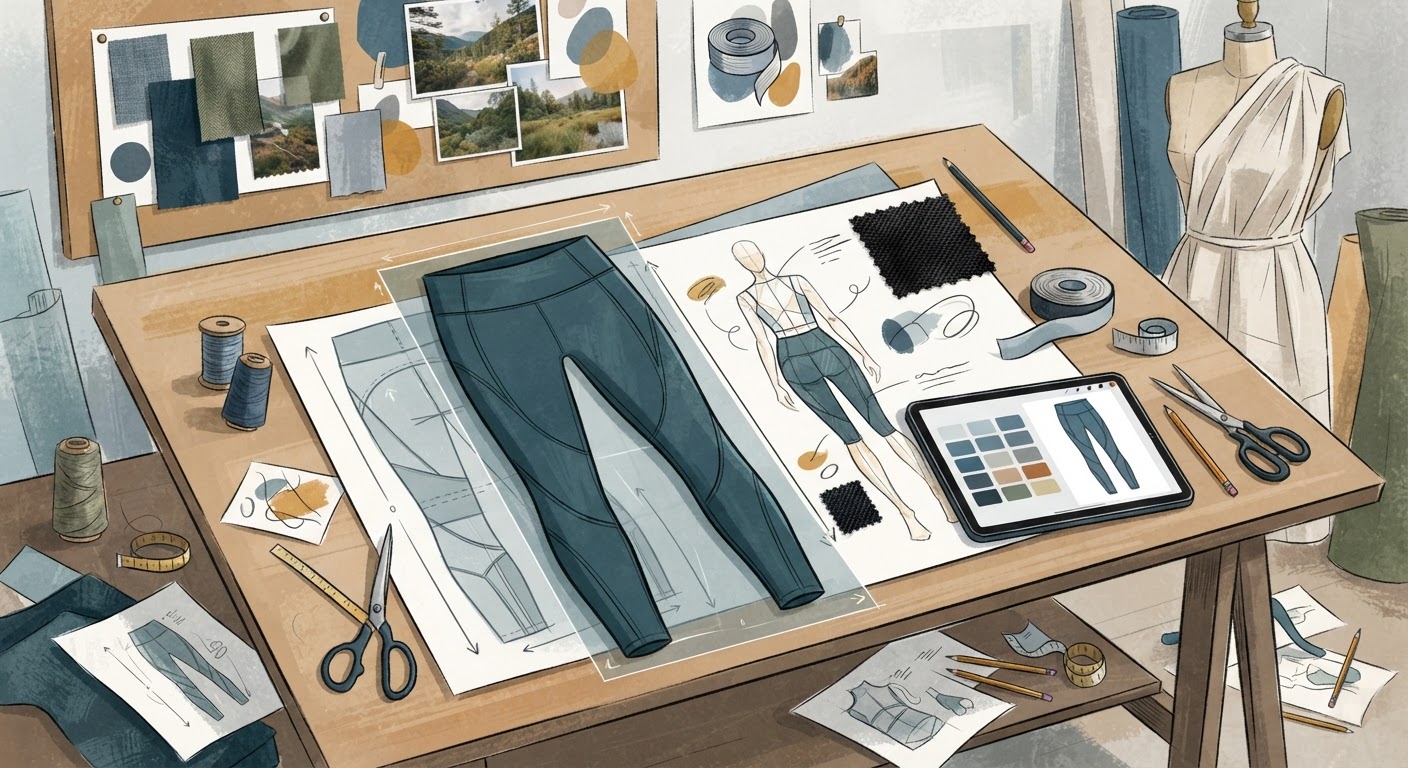
My professional perspective is shaped by my career journey in the apparel industry. Record design details clearly for both textile sourcing and garment assembly.
Why the Tech Pack is Your Primary Production Language
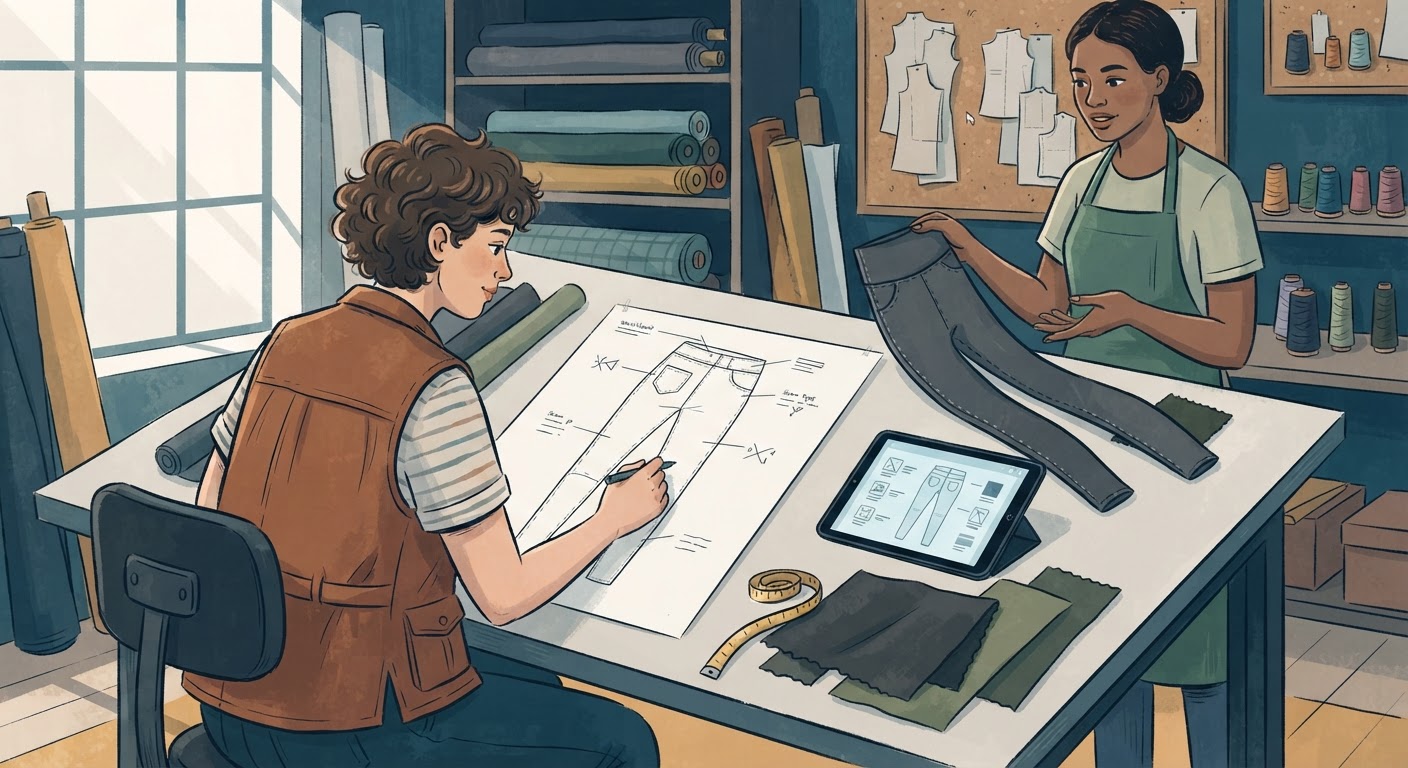
A thorough tech pack provides the basis for costing and minimum order quantity (MOQ)1 estimation. When you submit a design to a manufacturer, they cannot provide a reliable quote based on a simple sketch or a mood board. The production team requires a detailed Bill of Materials (BOM)2 and explicit construction notes to calculate the exact material consumption, labor steps, and machinery time required.
Furthermore, record each physical sampling round and the design changes it is intended to resolve. Each physical iteration consumes fabric, shipping costs, and valuable development time. By investing time upfront to build a highly detailed tech pack, you establish a clear standard of accountability. The document acts as a reference of specifications, helping both your product development team and the factory’s patternmakers work toward the same target.
Important Components for Reducing Sampling Errors
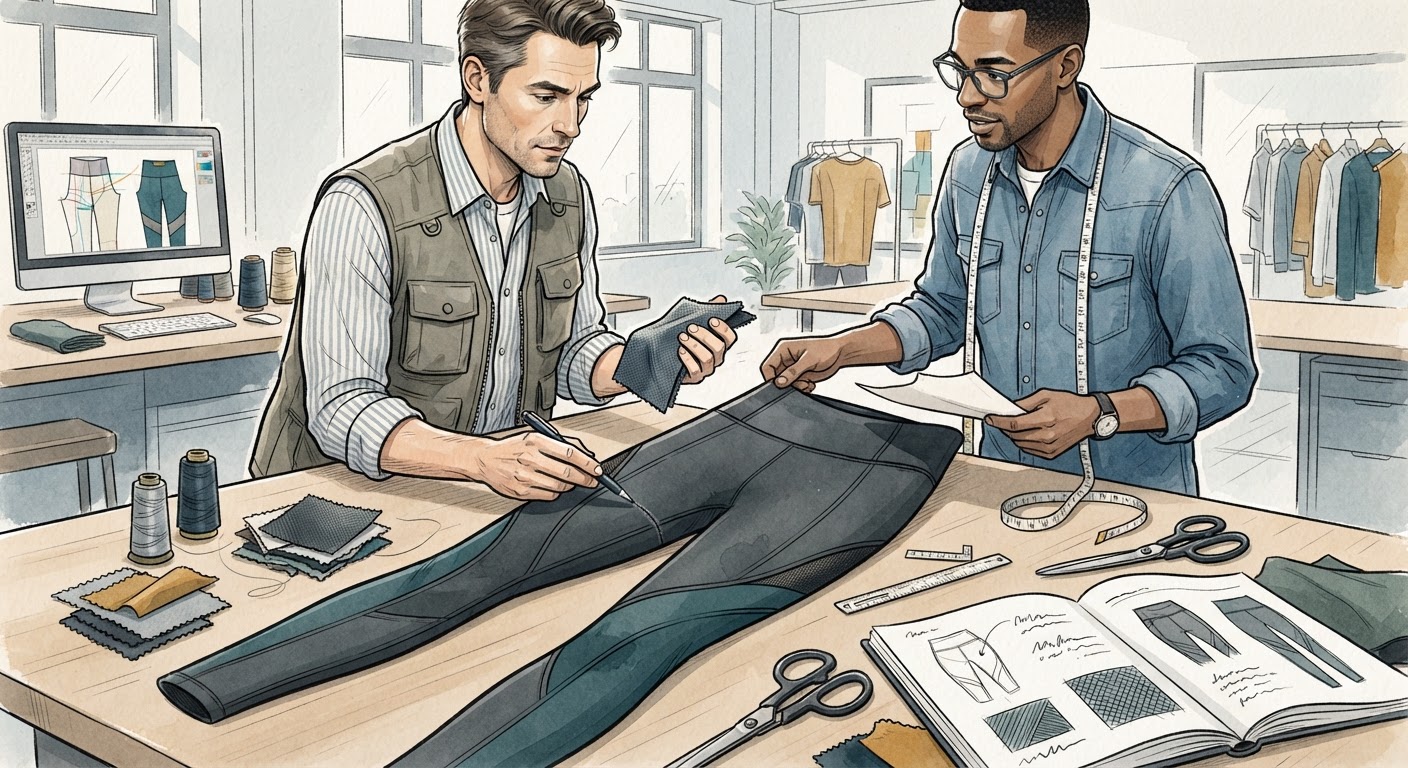
1. Technical Drawings and Flat Sketches
Your tech pack should begin with clear, black-and-white technical flats3 showing both the front and back of the garment, as well as close-ups of complex details like internal pockets, specialized stitching, or unique closures. Avoid stylized fashion illustrations; the factory needs to see exact proportions and seam placements.
2. The Bill of Materials (BOM)
The BOM is a comprehensive list of every physical component required to construct the garment. This includes:
- Shell Fabric: Fiber content, weight (GSM)4, and weave or knit type.
- Trims: Zippers, buttons, snaps, drawcords, and elastic.
- Thread: Thread type, weight, and color matches.
- Labels and Tags: Main brand labels, care labels, size tabs, and hangtags.
3. Measurement Specification and Size Gradings
Provide a detailed spec sheet listing the key points of measurement (POM)5 for your sample size. This table defines the target dimensions for the chest, waist, hips, sleeve length, and hem, along with acceptable tolerances for each measurement.
4. Colorways and Artwork Specifications
Clearly define the placement, scale, and execution method (such as screen printing, embroidery, or sublimation) for any graphic artwork. If the garment is offered in multiple colorways, map out which fabric, trim, and thread colors belong to each specific version.
Defining Materials and Construction for Accuracy
| Product Variable | Common “Visual Similarity” Risk | Recommended Tech Pack Specification |
|---|---|---|
| Main Fabric Color | Off-shade dye lots, metamerism | Specify agreed Pantone TPX/TCX color references |
| Zippers & Closures | Mismatched weight, teeth, or pullers | Specify brand, material, and length |
| Stitching & Seams | Weak seams, puckering, wrong thread | Define SPI (Stitches Per Inch) and type |
| Brand & Care Labels | Incorrect placement, scratchy material | Provide vector artwork and placement map |
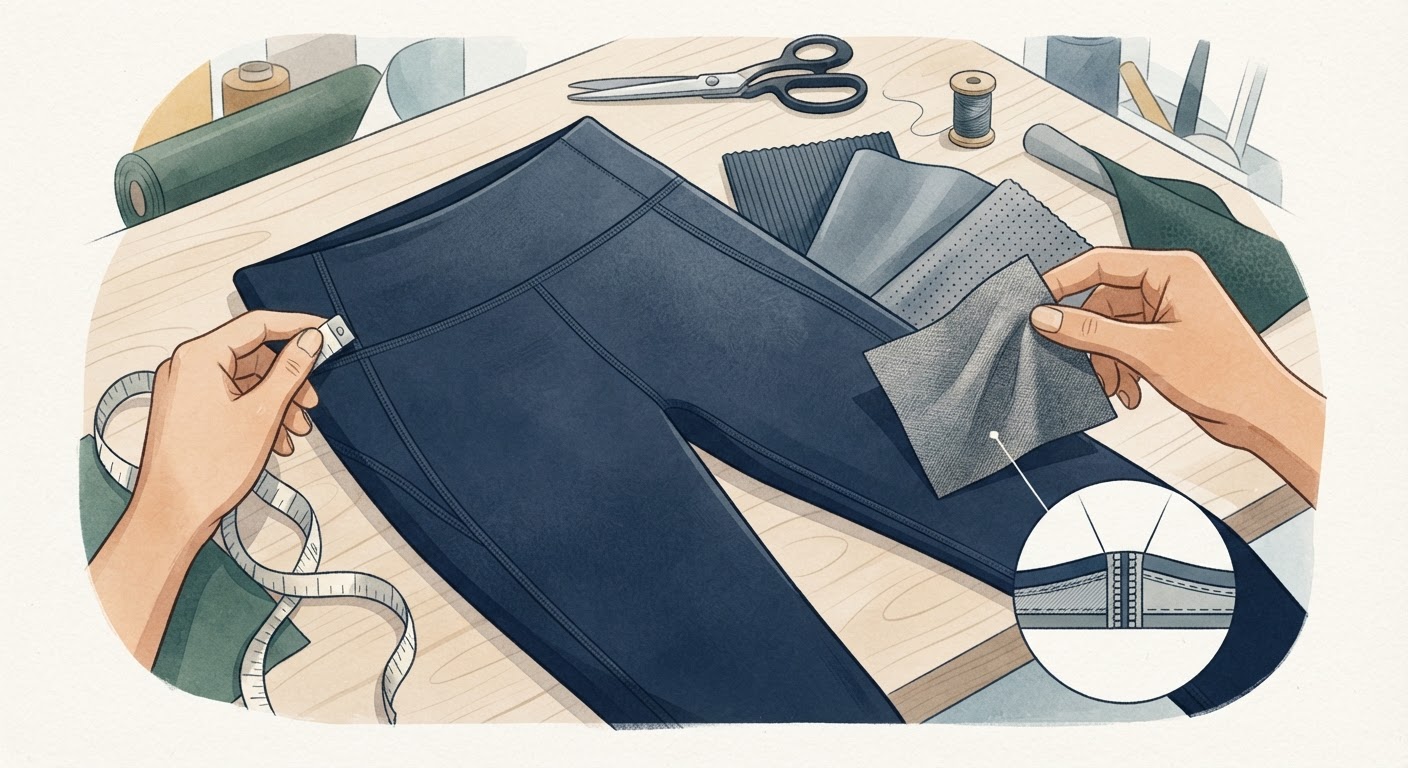
When defining construction, specify the exact seam types (such as flatlock, overlock, or double-needle topstitch) and the desired stitches per inch (SPI)6. For example, document the SPI and seam construction separately for a silk blouse and a canvas jacket. Clearly documenting these details helps the factory select the machinery and techniques during the sampling run.
Collaborating with Your Manufacturer on Technical Specifications

When preparing for production, a product team should review the representative product and sourcing decisions using a typical industry decision pattern. I recommend using this framework to guide your development checks:
- Evaluate Internal Capacity: Determine if your internal team has the capacity to create a complete, production-ready tech pack, or if you require technical design assistance from your manufacturer.
- Verify Factory Support: Confirm if your chosen manufacturer has a dedicated product development team to review, test, and refine your tech packs before bulk cutting.
- Select Market-Specific Standards: Select the test method or standard applicable to your target market with the buyer, then verify the requirement through a qualified supplier or laboratory before bulk approval.
- Conduct Provisional Testing7: Treat any performance comparison or material specification as provisional until representative samples are tested under your intended construction, use, and approval conditions.
By establishing these checkpoints early, you help make your tech pack a functional, manufacturable document.
Conclusion
Review the clothing tech pack to verify the target specification, sampling, development, and production timeline before bulk approval. Verify the measurements, bill of materials, construction methods, and color standards against the representative sample before bulk approval. Before launching into physical sampling, collaborate closely with your factory’s development team to review every specification, ensuring your technical blueprint is fully optimized for the production floor.
-
minimum order quantity (MOQ) – Source: How to Plan MOQ in Garment Production – Thai Son S.P — thaisonsp.com. ↩
-
Bill of Materials (BOM) – Source: What is a tech pack and why you need one for apparel production — The Fashion Business Coach — thefashionbusinesscoach.com. ↩
-
technical flats – Source: Flat Sketches in Fashion: What They Are and How to Sketch Them — techpackwizard.com. ↩
-
Fiber content, weight (GSM) – Source: Fabric Weight & GSM Guide for Spandex, Stretch & Activewear – Spandexbyyard — spandexbyyard.com. ↩
-
key points of measurement (POM) – Source: How To Write Point Of Measure (POM) Tolerances | Alison Hoenes Design — alisonhoenes.com. ↩
-
stitches per inch (SPI) – Source: SPI for Patches: Stitch Density, The Ultimate Guide – packlove — mypacklove.com. ↩
-
Provisional Testing – Source: What Is the Best Fabric for Leggings? A Sourcing Guide for Activewear Brands — ljgarment.com. ↩