Are you struggling with customer complaints and high return rates because your brand’s leggings develop unsightly fiber balls after just a few wears?
Leggings pill when friction and abrasion during wear or washing cause short, loose textile fibers to break, tangle, and form small balls on the fabric surface. To prevent this, product teams must select long-staple fibers, optimize yarn twist, and apply targeted manufacturing finishes.
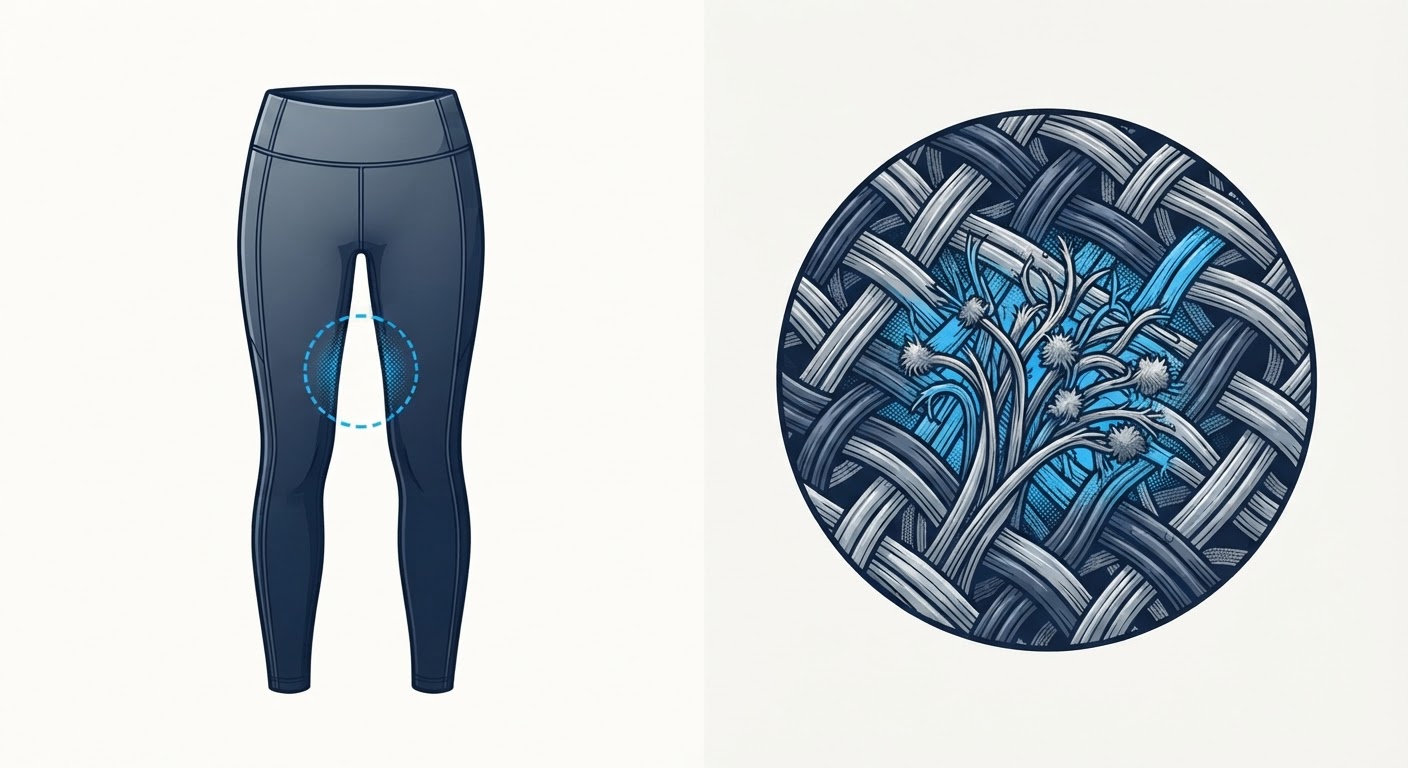
Understanding the root causes of fabric abrasion allows activewear brands to make better sourcing decisions. This guide explains how fabric selection and production methods directly impact pilling.
What Causes Leggings to Pill?
Are your customers complaining about fuzzy wear spots on their inner thighs and waistbands?
Frequent friction during workouts and daily wear causes fiber breakage, which quickly turns premium-looking activewear into returned merchandise.
The Mechanics of Fiber Abrasion
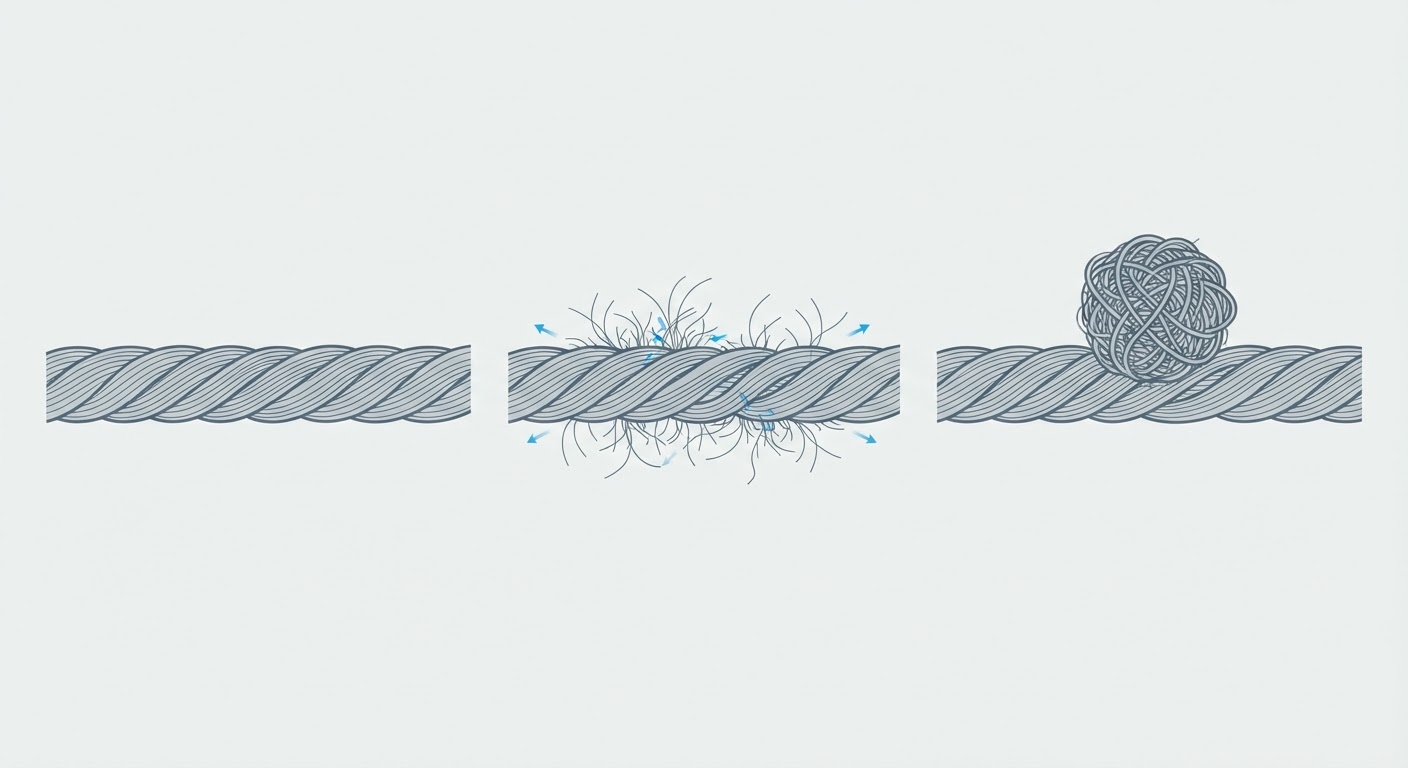
Pilling is a natural physical reaction in knit fabrics. When the surface of the leggings rubs against another surface—or against itself, such as between the thighs—the individual fiber ends pull away from the yarn. These loose ends tangle together, forming small, stubborn balls known as pills.
Why Synthetic Fibers Hold Onto Pills
While natural fibers like cotton may pill, the weak fibers often break off naturally during washing. Synthetic fibers like polyester and nylon are incredibly strong. When these synthetic fibers tangle, the strong core yarn holds the pill tightly to the garment surface, making them highly visible and difficult to remove.
When I collaborate on product development with Sarah Chen, she often shares how difficult it is to balance softness with durability. I always explain that the very strength of synthetic performance yarns is what keeps those pills trapped on her customers’ leggings.
What Fabrics and Yarn Structures Resist Pilling Best?
Are you choosing fabrics based solely on hand-feel without verifying how the yarn was actually spun?
Selecting the wrong fiber length or yarn twist will lead to surface fuzzing regardless of how premium the fabric feels at first touch.
Fiber Length and Yarn Twist
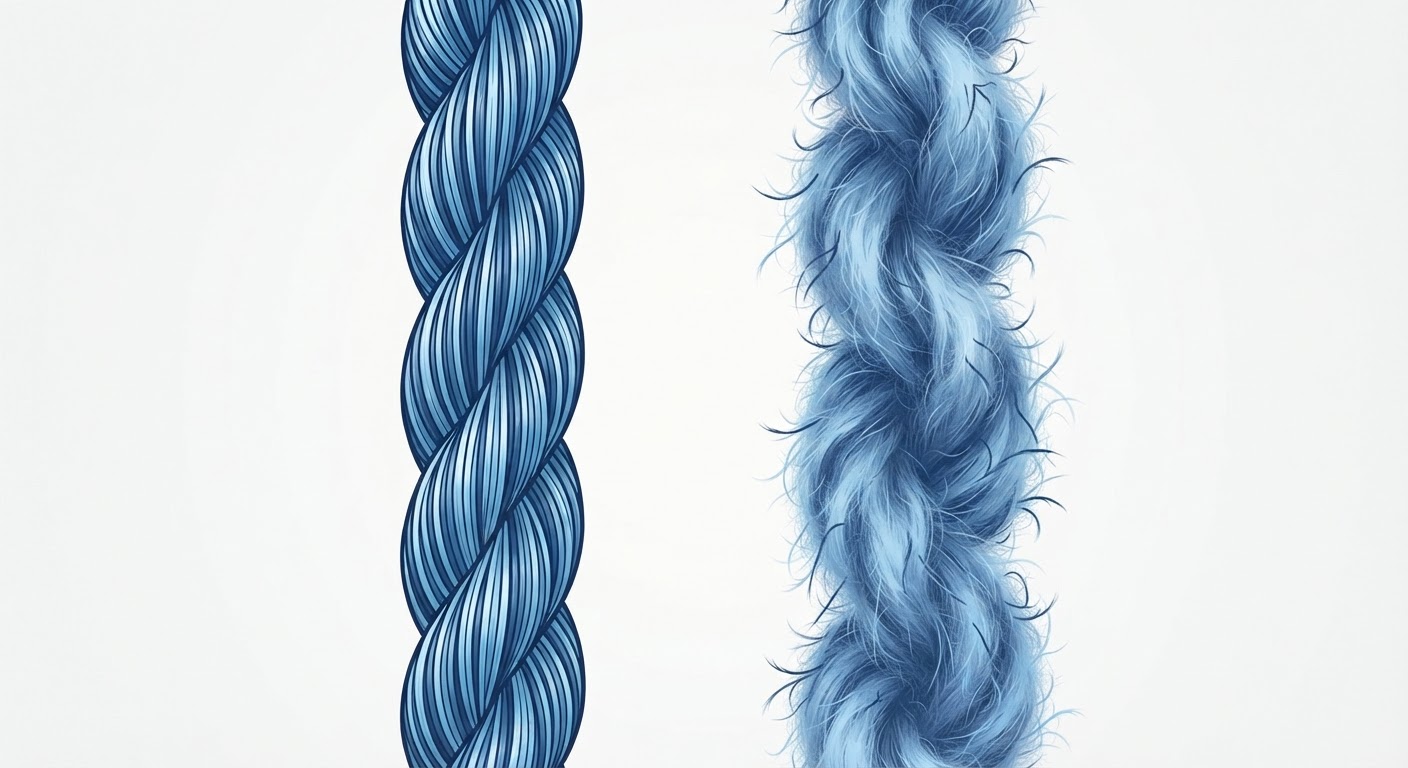
The structure of the yarn is your first line of defense against pilling. Fabrics made from long-staple fibers have fewer loose ends exposed on the surface. Additionally, tightly twisted yarns hold the fibers securely in place, making it much harder for friction to pull them loose.
Comparing Fabric Specifications for Leggings
When sourcing, product managers must weigh the trade-offs between softness, stretch, and pilling resistance.
| Fabric Blend | Pilling Resistance | Softness & Hand-Feel | Primary Use Case |
|---|---|---|---|
| Nylon / Spandex (High Twist) | Excellent | Smooth, cool touch | High-intensity training, compression |
| Polyester / Spandex (Brushed) | Moderate to Low | Extremely soft, warm | Loungewear, low-impact yoga |
| Interlock Knit Synthetics | Good | Structured, supportive | Everyday lifestyle leggings |
To help Sarah Chen compare options for her upcoming collection, we analyzed these fabric structures. We decided to transition her high-abrasion styles to a high-twist nylon blend while keeping brushed finishes strictly for low-impact lifestyle pieces.
Which Manufacturing Processes Prevent Pilling?
Are you relying only on fabric care labels to stop pilling instead of addressing it during production?
Skipping specialized textile finishes during the manufacturing phase leaves your garments highly vulnerable to friction.
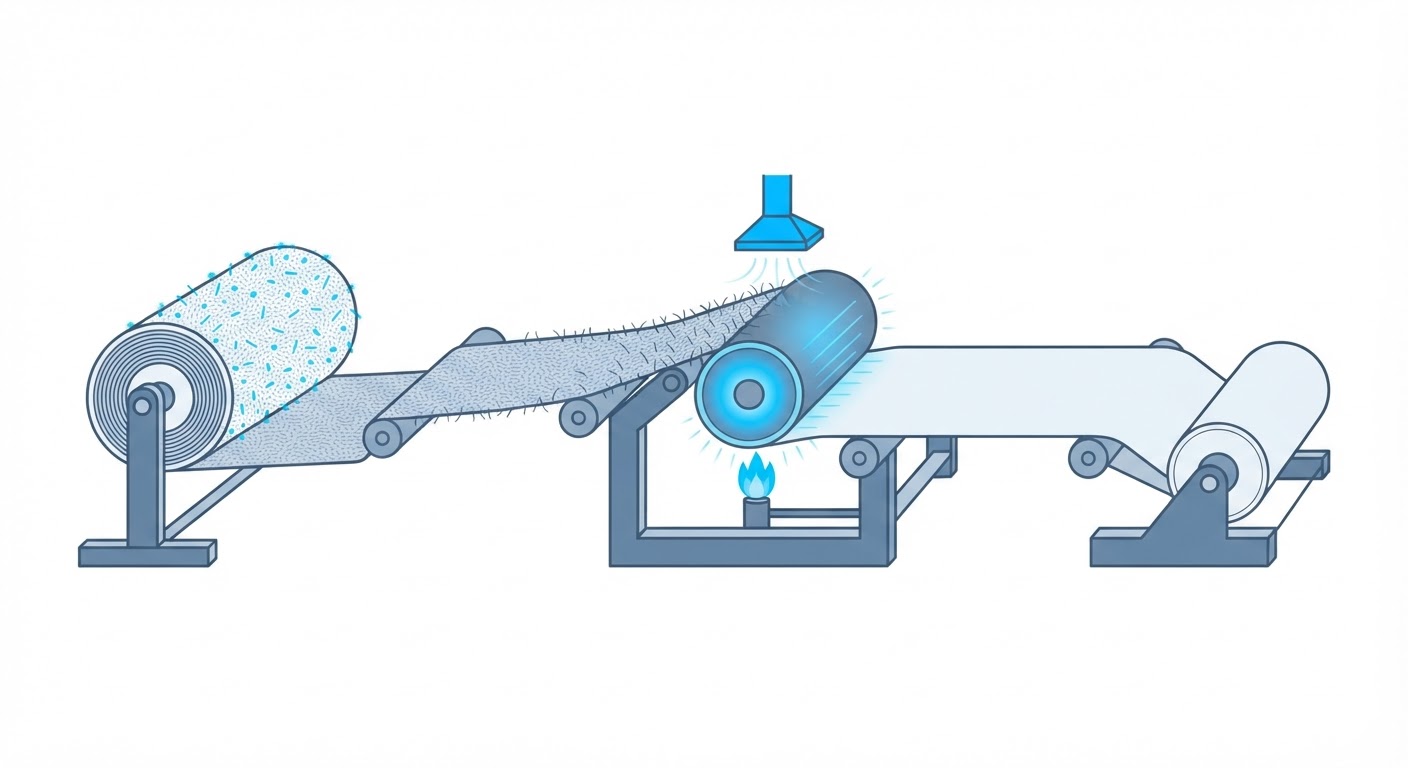
Physical and Chemical Textile Finishes
Textile mills use several advanced techniques to minimize surface fuzz before the fabric is cut and sewn:
- Singeing: This process passes the fabric over an open flame or heated plates to burn off loose, protruding surface fibers.
- Compacting: This mechanical process compresses the knit structure, reducing the space between yarns and locking fibers in place.
- Anti-Pilling Finishes: Chemical treatments can be applied to bind surface fibers together or to weaken the fiber ends slightly, allowing any pills that do form to fall off easily during washing.
Impact on Sourcing and Production
Adding these protective steps can influence your production timeline and unit costs. To help brands make informed decisions, we recommend using this verification checklist during the sampling phase:
- Request the specific yarn spinning method (e.g., vortex spinning vs. ring spinning) from the mill.
- Verify if a physical singeing or compacting1 process was performed on the fabric roll.
- Ask the supplier for the third-party pilling test report (such as ASTM D3512 or ISO 12945).
- Confirm if the anti-pilling chemical finish affects the moisture-wicking performance of the fabric.
- Check if the treatment remains effective after multiple commercial laundry cycles.
How Does Garment Fit and Design Influence Pilling?
Are your design patterns putting unnecessary stress on high-friction areas of your leggings?
Poor pattern design and incorrect sizing increase surface tension, which accelerates fabric wear and pilling.
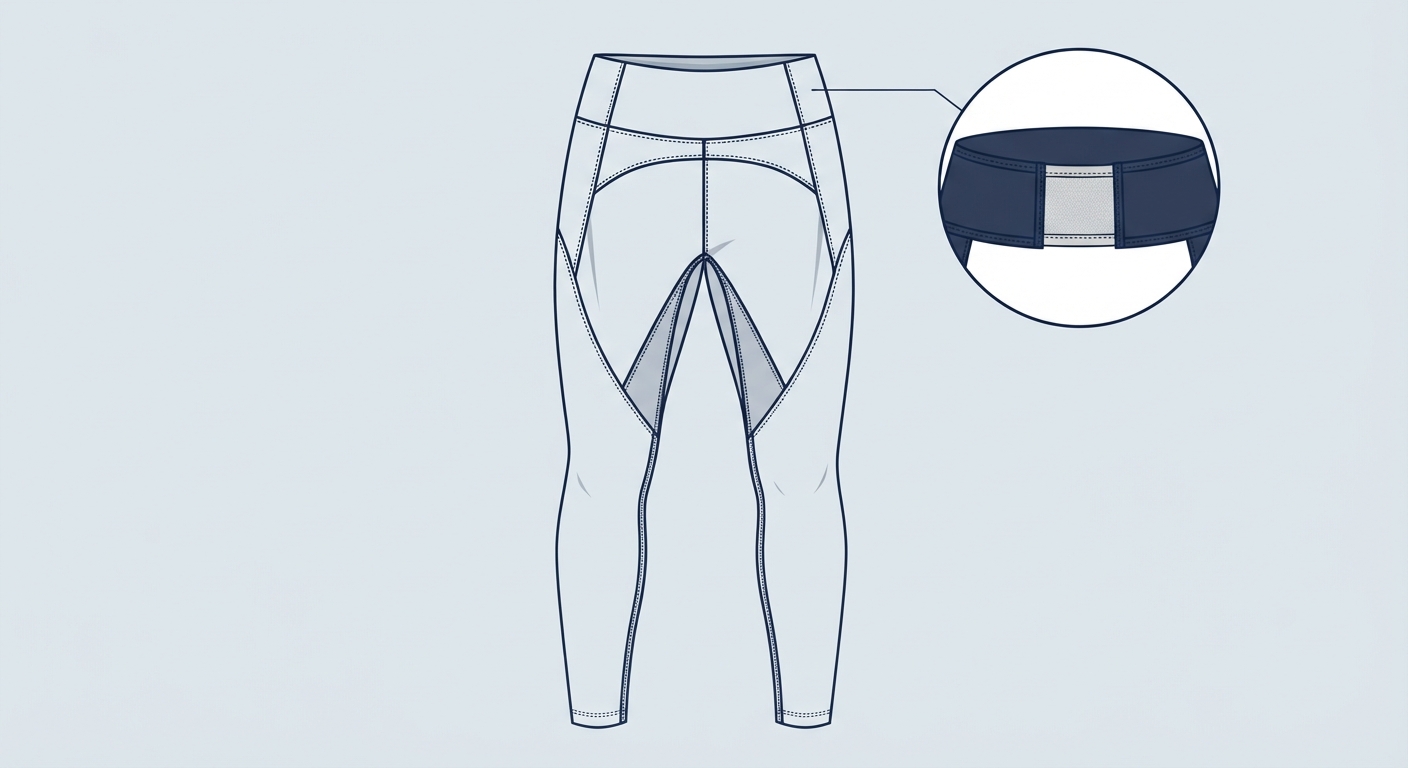
High-Abrasion Zones and Seam Placement
Garment construction plays an indirect but critical role in fabric wear. Leggings with seams placed directly in high-friction zones, such as the inner thigh or crotch, experience concentrated abrasion. Moving seams away from these contact points reduces friction.
The Problem of Fabric Roll Down
Another common complaint that leads to localized pilling is waistband roll down. When a waistband rolls down, it creates friction against outer clothing and requires constant manual adjustment.
At LJ Garment, we analyze pattern construction to solve these issues. Based on our factory expertise, waistband roll down is often caused by:
- Pattern issues, such as a waistband that is too large or too small, or a waist opening designed without an anatomical curve.
- Double-layer fabric waistbands designed without an internal elastic band, especially if the fabric lacks recovery.
- Insufficient spandex content or low-quality spandex that lacks proper recovery.
- Heavyweight fabrics that lack sufficient stretch, causing the garment to slide down.
- Fabric surfaces that are too smooth, which reduces friction against the skin.
- An incorrect size choice by the consumer.
To resolve waistband roll down and the resulting wear, we recommend choosing from these production solutions:
- Add a 0.5cm to 1cm elastic band inside the top edge of the waistband.
- Apply interior silicone anti-slip strips or silicone dot printing.
- Optimize the pattern curves to better fit the natural waistline.
- Replace the fabric if the recovery properties do not meet performance standards.
Conclusion
Reducing legging pilling requires selecting high-twist yarns, applying proper textile finishes, and optimizing garment patterns to minimize friction. Taking these steps ensures long-lasting quality that protects your brand’s reputation.
-
compacting – Compacting compresses the knit structure to lock fibers in place, minimizing fiber movement and pilling. Source: Understanding Fabric Pilling: Which Fabrics Are Prone to Pilling – Testex. ↩