
Persistent camel toe issues in leggings samples delay your launch, drain your development budget, and threaten your brand reputation. Solving this before bulk production is critical for your activewear brand.
To prevent camel toe in leggings before bulk production, brands must eliminate the front rise seam or integrate a strategic crotch gusset (triangular or diamond), optimize fabric stretch and recovery1, and conduct rigorous fit testing across diverse body types during the prototyping phase.
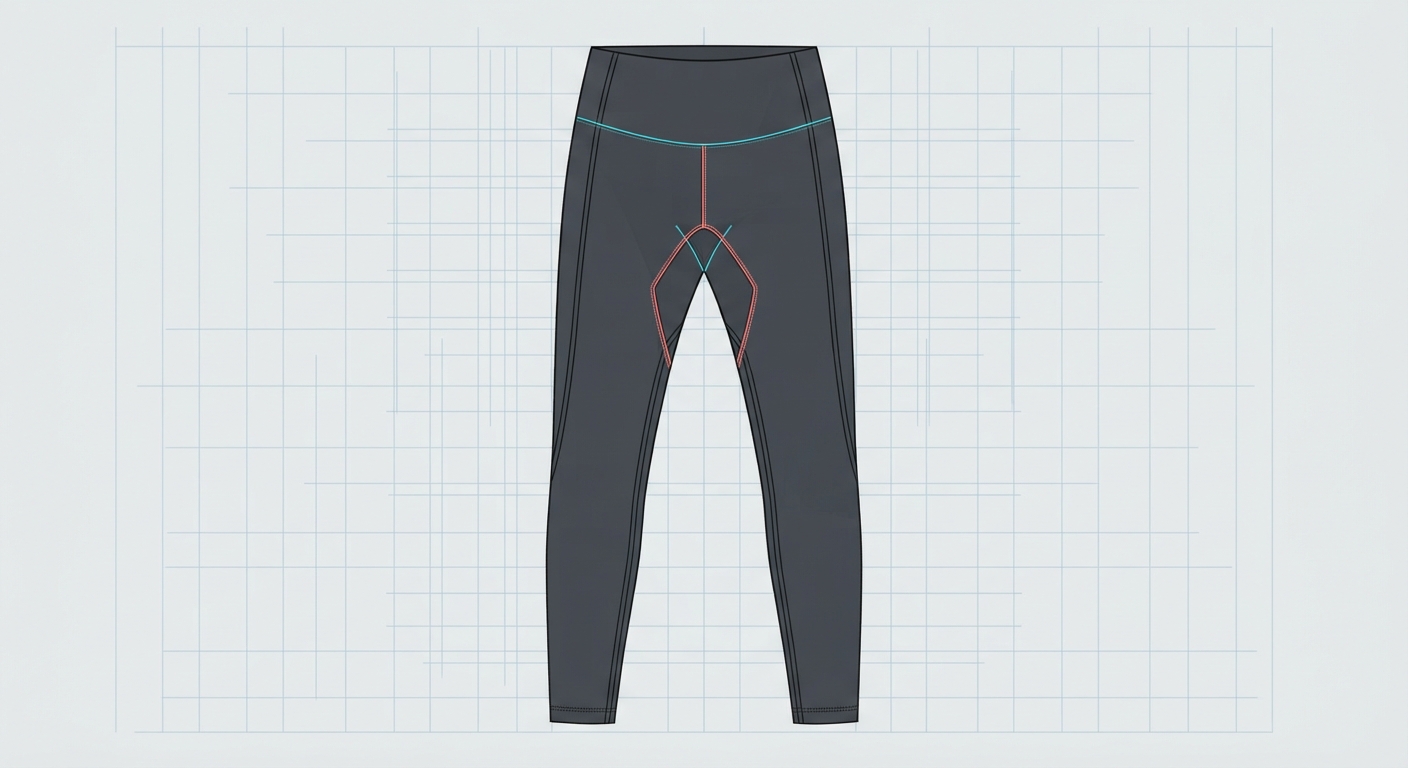
As a dedicated partner in Cut & Sew manufacturing, I understand how frustrating it is to receive physical samples that fail the fit test. When I collaborate with product developers like Sarah Chen, we tackle these technical challenges systematically before a single yard of fabric is cut for mass production. Let us explore the exact engineering steps to eliminate this issue early.
Why Does Camel Toe Occur in Leggings?
High return rates and negative customer reviews often stem from a poor crotch fit. Identifying the root causes of camel toe early protects your brand reputation and bottom line.
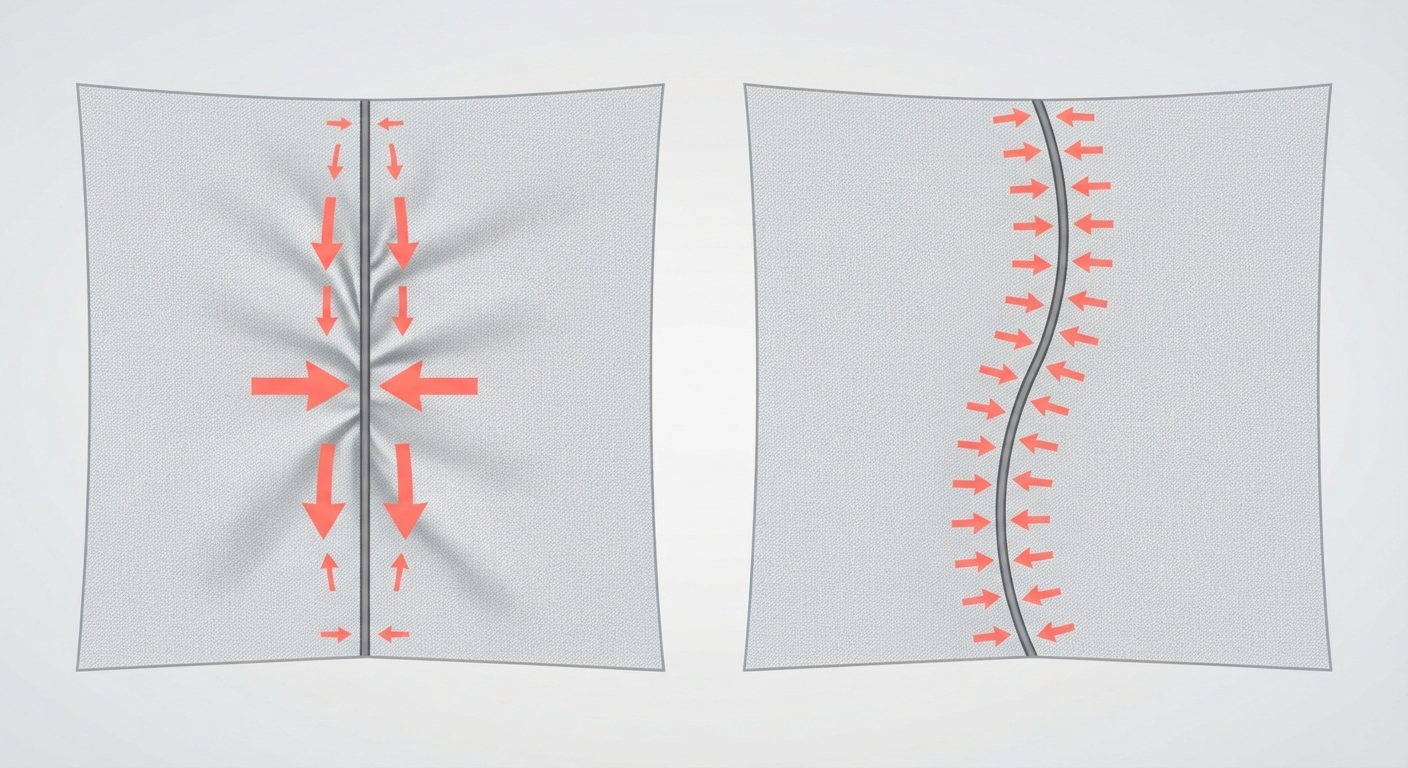
Camel toe occurs due to excessive vertical tension pulling the fabric into the crotch area. This is caused by poor pattern geometry (like a straight front seam), incorrect sizing, or using fabrics with inadequate thickness, low stretch, or poor elastic recovery.
The Interplay of Pattern and Fabric
In my years running LJ Garment, I have learned that tight-fitting garments can never be 100% immune to fit issues for every single wearer. Because one pattern or size cannot fit all body shapes, we must design for the widest possible range. The issue typically boils down to two main factors: pattern construction and material behavior.
When the front rise of the legging is too short or lacks proper contouring, it creates a straight line of tension that pulls upward. If the fabric is too thin or lacks sufficient recovery, it conforms too closely to the body’s anatomy instead of smoothing over it.
Material Specifications to Monitor
When I work through this decision with Sarah, I first look at her fabric selection. We compare how different fabric weights and stretch profiles behave under tension.
| Fabric Property | Impact on Fit | Risk Level |
|---|---|---|
| Low GSM (Thin fabric) | Conforms too easily to body contours | High Risk |
| Poor Recovery (Low Elastane) | Bags out and sags, pulling seams tight | High Risk |
| High GSM & High Elastane | Offers compression and smooths contours | Low Risk |
What Pattern Adjustments Best Prevent This Issue?
Communicating pattern changes to overseas manufacturers can be incredibly difficult. Misunderstandings lead to endless sampling rounds, delayed timelines, and wasted development budgets.
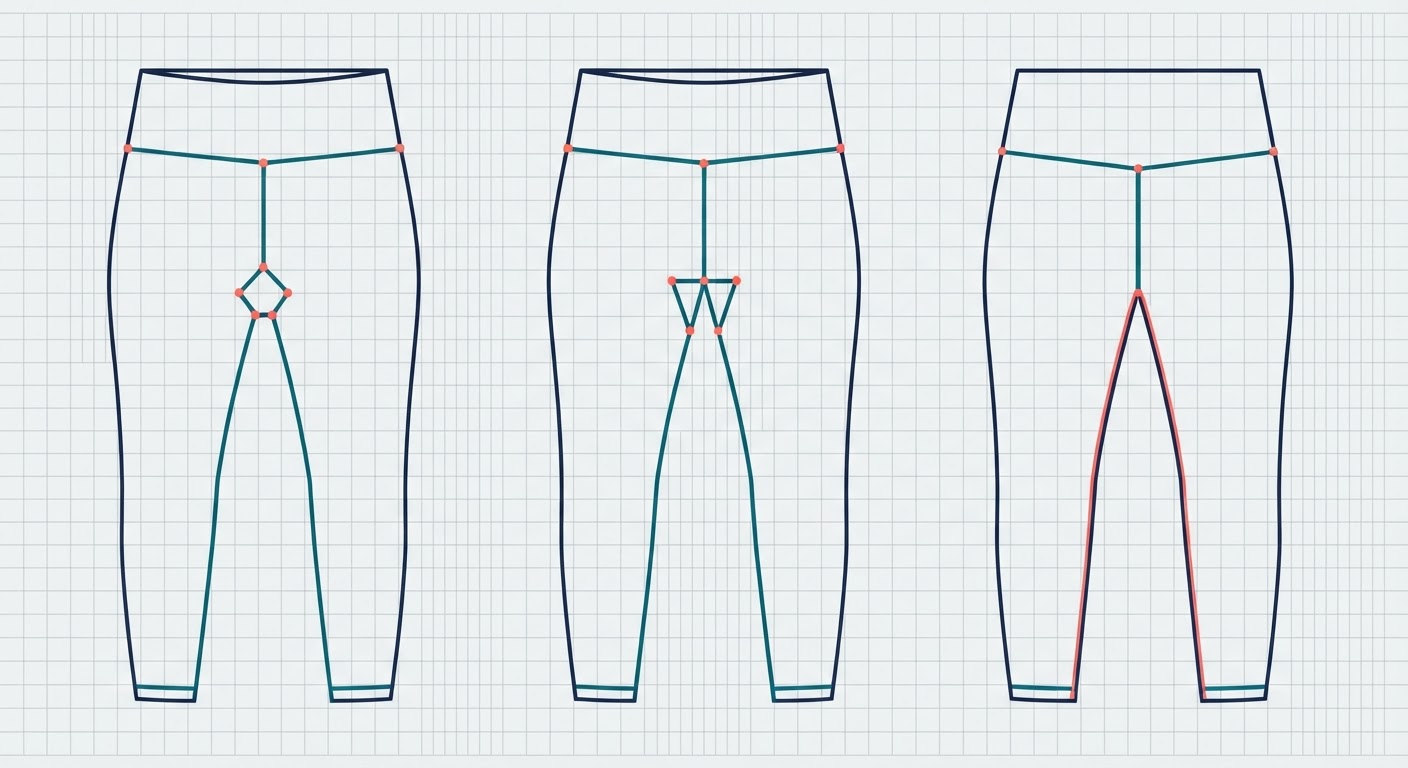
The most effective pattern adjustments include removing the front center seam entirely or adding a specialized crotch gusset (triangular or diamond-shaped). These structures redistribute fabric tension away from the pubic area, creating a smoother, flatter fit.
The Power of the Crotch Gusset
Adding a gusset is the industry standard for high-quality activewear. A gusset is an extra piece of fabric sewn into the crotch intersection. It changes the geometry of the garment, shifting the seams away from the center.
I helped Sarah compare different gusset styles for her upcoming collection. We looked at how each style alters the fit, seam bulk, and production complexity.
Comparing Gusset Types
- Diamond Gusset: This offers the maximum distribution of tension. It extends down the inner thighs, making it ideal for high-performance yoga pants and running leggings.
- Triangular Gusset: A smaller, discreet option that reduces bulk while still shifting the central seam intersection away from the sensitive area.
- Seamless Front (No Center Seam): This involves wrapping the pattern piece around the front, eliminating the vertical seam entirely. It is highly effective but requires wider fabric yields.
| Gusset Type | Best Application | Seam Bulk | Production Cost |
|---|---|---|---|
| Diamond | High-performance athleticwear | Medium | Higher |
| Triangular | Everyday lifestyle leggings | Low | Moderate |
| Seamless Front | Premium yoga wear | Minimal | Higher (due to fabric yield) |
How Can Brands Test Samples Effectively Before Bulk Production?
Relying on a single fit model often leads to unexpected fit complaints after launch. Real-world movement reveals hidden pattern flaws that static mannequins miss entirely.
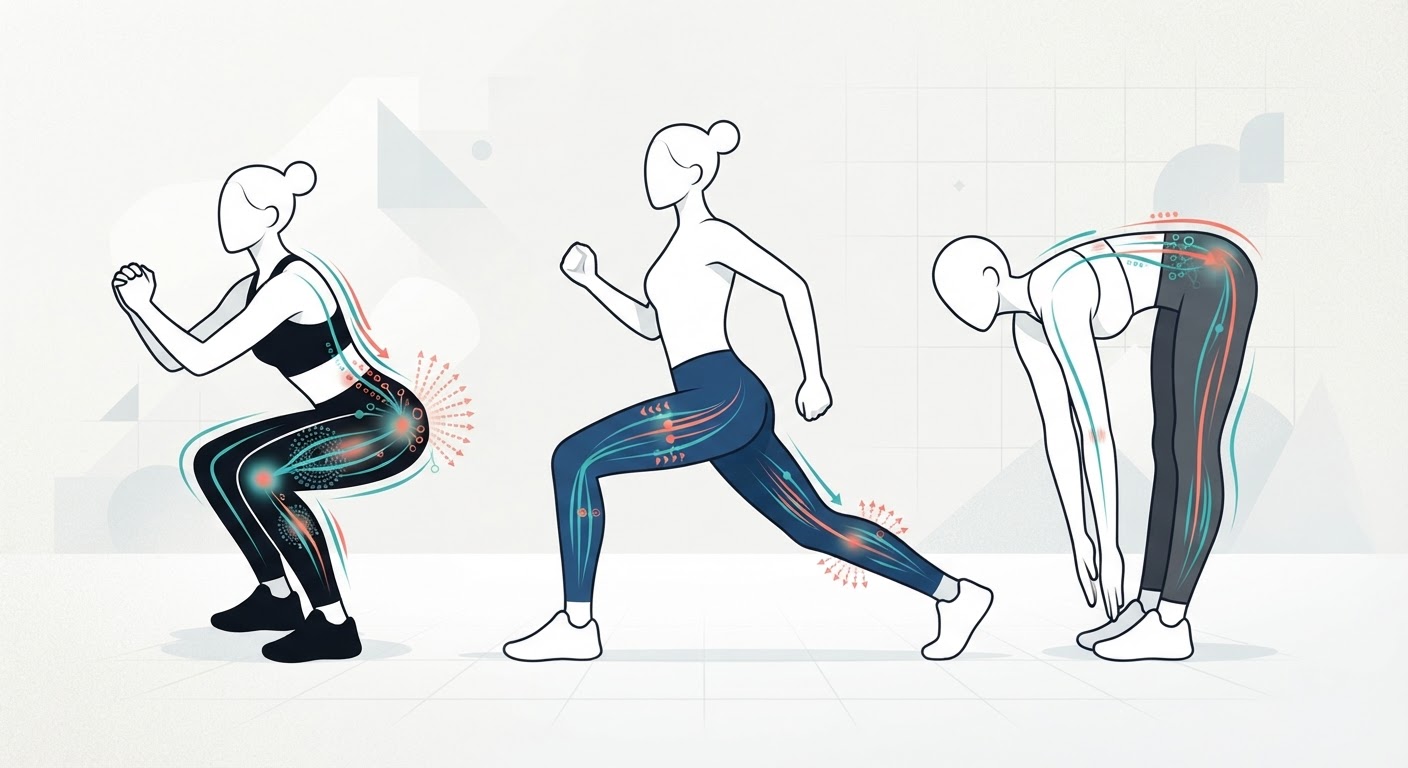
Brands must conduct thorough fit testing on diverse body types during the sampling phase. Models should perform dynamic movements—like squats, lunges, and stretches—to verify that the crotch gusset and fabric tension remain stable and smooth under physical stress.
Dynamic Fit Testing Protocols
At LJ Garment, we emphasize that 3D digital rendering and static mannequins are only the starting points. To truly prevent fit issues like camel toe, physical wear testing is indispensable.
When Sarah and I review prototypes, we don’t just look at how they hang on a hanger. We send physical samples to fit models of different sizes. We ask them to perform a specific movement protocol:
- Deep Squats: Tests vertical tension and fabric opacity.
- High Knees: Evaluates how the crotch area handles rapid movement and stretching.
- Extended Wear: Checks if the fabric loses its recovery and begins to sag after several hours.
Feedback and Iteration
Gathering structured feedback from these tests allows us to make micro-adjustments to the pattern before committing to bulk production. If a tester reports pulling, we can widen the gusset or adjust the front rise curve by a few millimeters. This proactive approach saves thousands of dollars in potential returns and preserves your brand’s reputation for premium quality.
Conclusion
Preventing camel toe requires optimizing pattern geometry with gussets, choosing high-recovery fabrics, and conducting dynamic fit testing2 on diverse body types before starting bulk production.
-
optimize fabric stretch and recovery – Details how fabric properties like stretch and recovery impact fit and comfort, critical for avoiding fit problems. Source: How to Prevent Camel Toe in Leggings: OEM Guide. ↩
-
dynamic fit testing – Details the process and importance of testing garments on moving models to detect fit issues. Source: QC Process. ↩