
You’ve found the perfect fabric for your new collection, but you fear hidden flaws. Bad fabric can ruin your entire production run, wasting thousands of dollars and damaging your brand's reputation.
The most effective way to prevent quality issues1 is to implement a systematic fabric inspection process2 before any cutting begins. This involves checking gram weight3, color consistency4, and visual defects5. This simple step is the foundation of high-quality clothing.
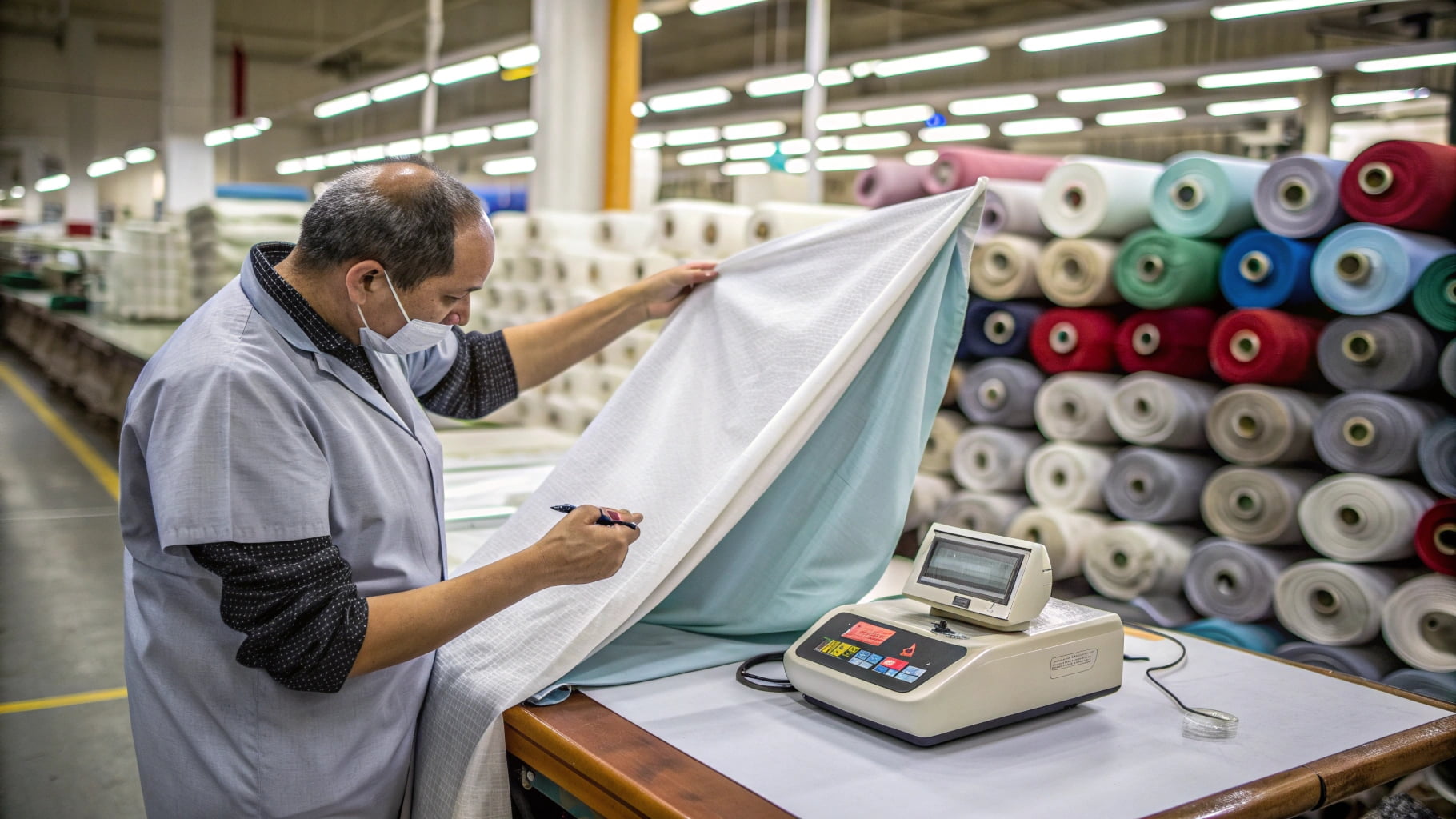
I can't tell you how many times I've seen promising clothing lines stumble because of one simple mistake: they trusted the fabric without checking it. The fabric is the foundation of your garment. If the foundation is weak, the entire house will collapse, no matter how beautiful the design is. Fabric inspection isn't just about finding flaws to send back to the mill. It's also about understanding the material you are working with. Sometimes, batches of fabric have small differences. Knowing this ahead of time allows us to adjust our production process to ensure every garment comes out perfect. Let's walk through how you can build this critical safety net for your brand.
How Do You Check the Quality of Fabric?
You know you need to inspect your fabric, but you don't know what to look for. The fear is that you will miss a critical flaw that only becomes obvious after the clothes are made.
To check fabric quality, you need a detailed checklist6. This process includes physical tests for weight and color, a visual scan for defects like streaks or stains, and performance tests7 for colorfastness8 and stretch. It's a methodical, hands-on approach.
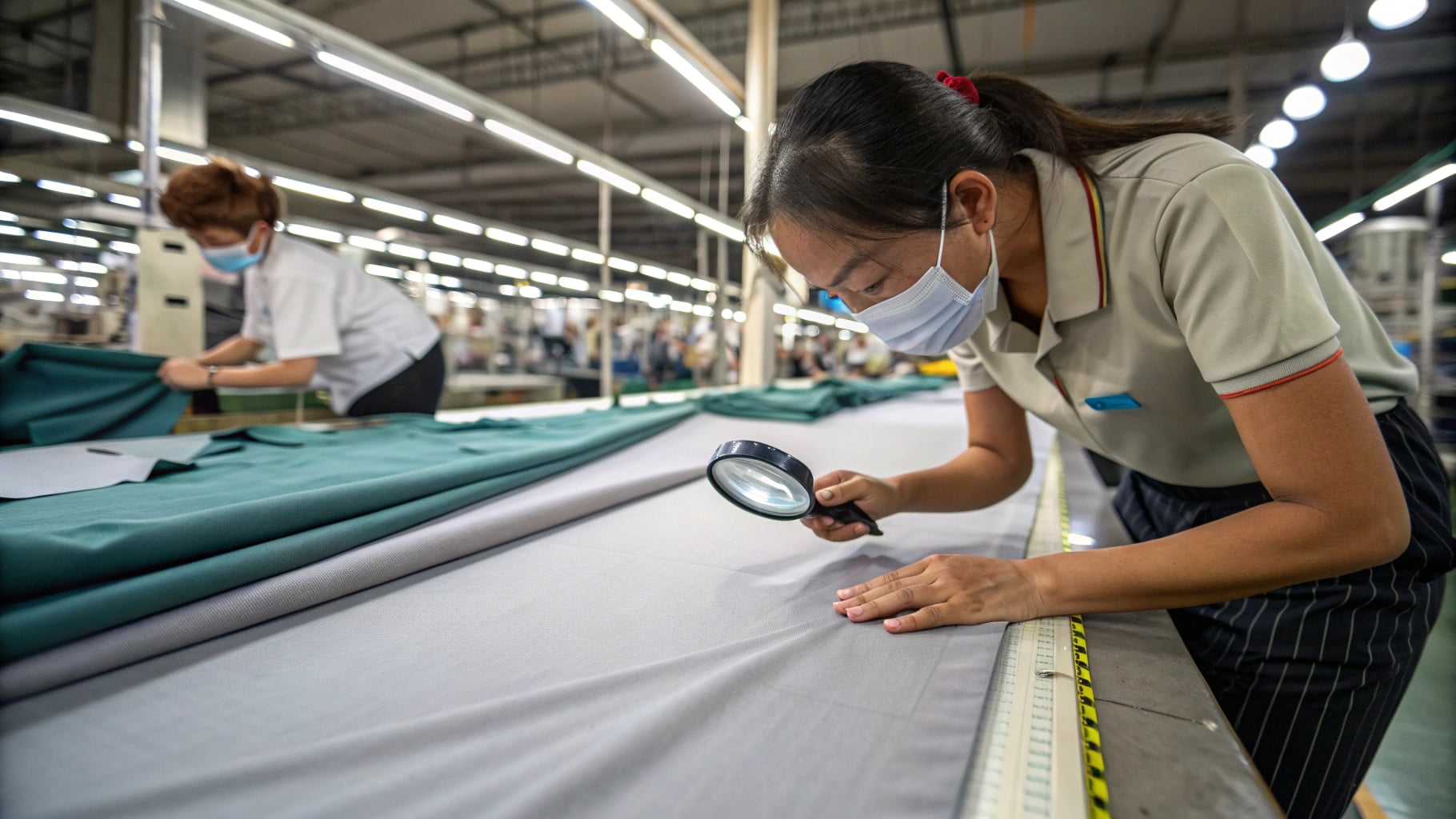
When a new batch of fabric arrives at our facility, we don't just move it to the cutting table. We treat it like a crucial quality control checkpoint. This isn't a quick glance; it's a deep-dive analysis. We start by verifying the basics—like weight and color—to ensure they match the standard we agreed upon. Then, our trained inspectors unroll the fabric under good lighting to hunt for any visual imperfections. This could be anything from a small stain to a line running down the fabric. We also perform simple physical tests to check how the fabric will perform in real life. Will the color bleed in the wash? Does it have enough stretch for its intended use? Only fabric that passes this comprehensive review moves on to production.
The Essential Fabric Inspection Checklist
Here is a breakdown of the key checks we perform. You should ensure your manufacturing partner does the same.
| Test Category | What We Check For | Why It Matters |
|---|---|---|
| Physical Basics | Weight (GSM), Width: | Ensures consistency and yield. Fabric that's too light or heavy will affect the garment's fit and feel. |
| Visual Defects | Stains, Streaks, Snags: | Obvious flaws that will ruin the appearance of the final garment. We look for these on the entire roll. |
| Color Issues | Side-to-Side & End-to-End Shading: | Inconsistent dyeing can lead to garments with mismatched color panels, especially on sensitive colors like grays. |
| Performance | Colorfastness, Stretch, Strength: | We simulate washing and wear to ensure the fabric won't bleed color, lose shape, or tear easily. |
| Structural Integrity | Skewing, Uneven Edges: | If the fabric grain isn't straight, it will twist and warp after being sewn, ruining the garment's shape. |
What Is the 4-Point System of Fabric Inspection?
You've heard of industry standards but aren't sure how they work. Without a clear system, judging fabric quality feels subjective and you worry about disagreements with your supplier.
The 4-point system9 is a standardized method for grading fabric quality. It assigns penalty points to defects based on their size. A fabric roll is accepted or rejected based on the total points per 100 square yards, providing an objective quality score.
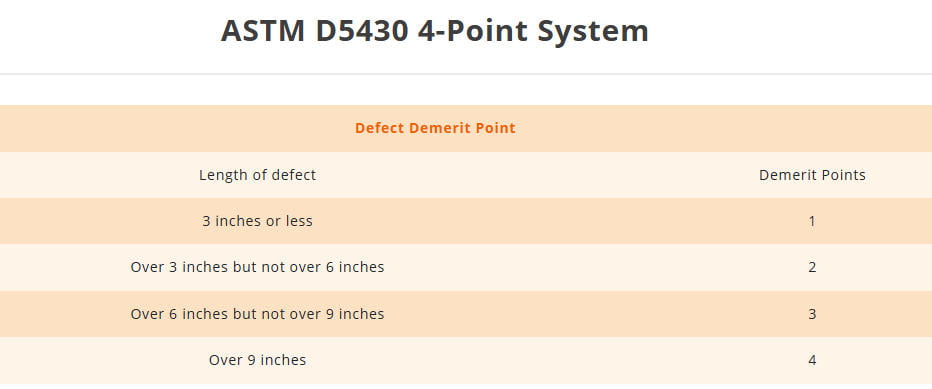
While our internal checklist is very detailed, many clients work with the 4-point system9. It's a widely accepted industry standard used to create an objective score for fabric quality. Think of it like a grading system. Instead of just saying "this fabric is bad," it quantifies the defects. Small defects get a low score, and large defects get a high score. An inspector will check a length of fabric (typically 100 yards) and add up all the penalty points. If the total score is below a certain threshold (for example, 40 points per 100 yards), the roll passes. If it's higher, the roll is rejected. This method removes personal opinion from the equation and creates a clear, numerical basis for accepting or rejecting a fabric shipment, which is very helpful for clear communication between the brand and the manufacturer.
How the 4-Point System Works
This system is simple and based on the size of the defect found in the fabric.
- Assigning Points:
- 1 Point: Defect is 3 inches or less.
- 2 Points: Defect is over 3 inches but not more than 6 inches.
- 3 Points: Defect is over 6 inches but not more than 9 inches.
- 4 Points: Defect is over 9 inches.
- A maximum of 4 points is assigned for any single yard of fabric, regardless of how many defects it has.
- Calculating the Result:
- Inspect the entire fabric roll and total the points.
- Use this formula:
(Total Points x 3600) / (Fabric Width in Inches x Total Yards Inspected) - The result is the number of penalty points per 100 square yards.
- Compare this number to the pre-agreed acceptance threshold.
What Happens When a Fabric Fails Inspection?
Finding a fabric flaw is one thing, but what's the next step? You worry that rejecting fabric10 will cause major production delays11 and arguments with your supplier.
When a fabric fails, we immediately mark it and separate it to prevent accidental use. Then, we communicate with the fabric mill to arrange for a return or replacement. Clear, immediate action is key to minimizing delays and protecting your production timeline.
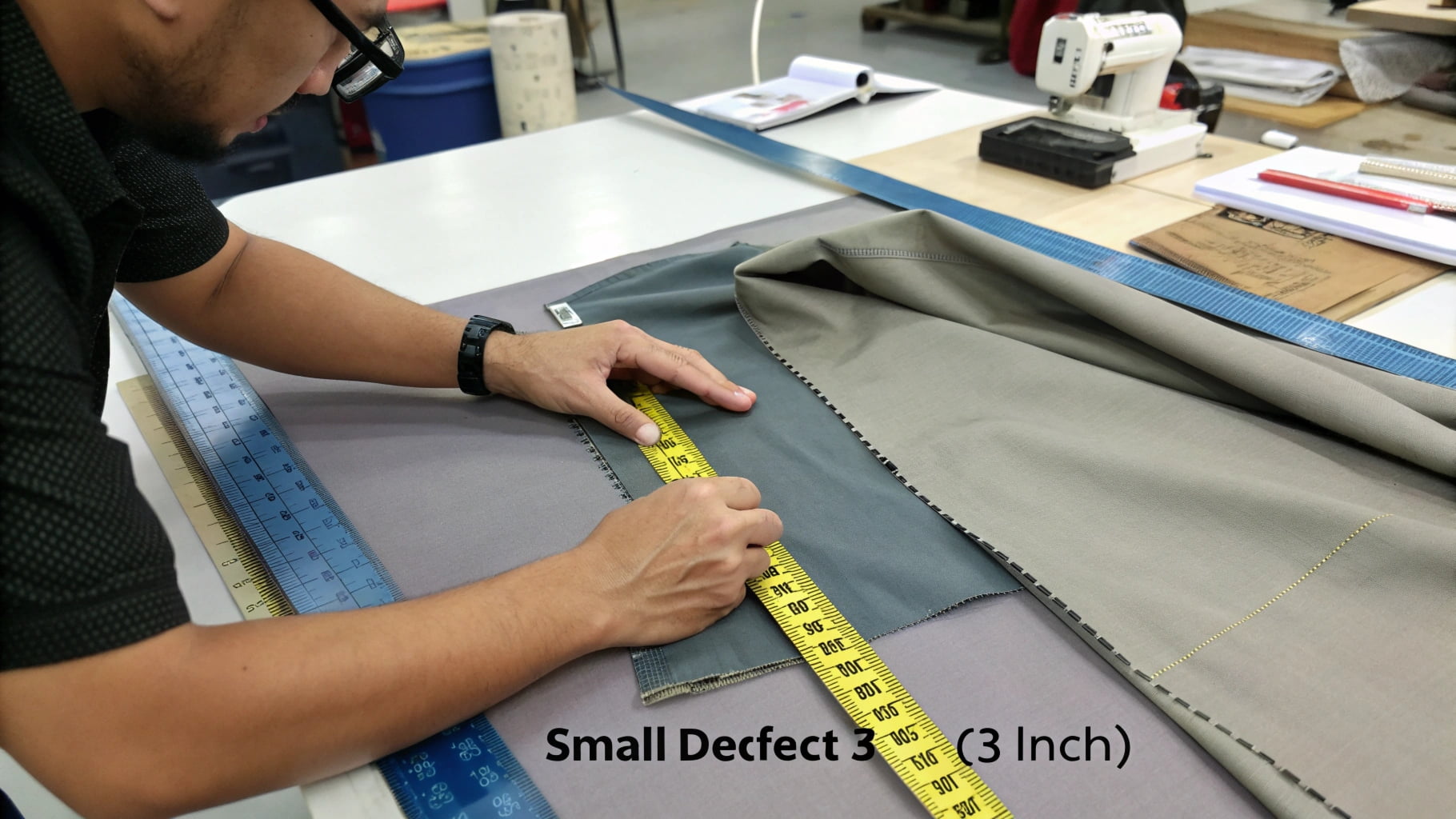
Finding a problem is only half the job. The actions you take afterward are what truly protect your business. The moment our team identifies a fabric roll that doesn't meet our standards, our process is simple and swift. First, we clearly mark the entire roll with a "REJECT" tag. This is a physical sign that prevents anyone from accidentally taking it to the cutting floor. Second, we document the issue with photos and a detailed report. Third, we contact the fabric mill immediately with this evidence. A good relationship with our suppliers is crucial here. Because we have these established partnerships, we can usually resolve the issue quickly. They will either replace the fabric or credit our account. This proactive process is vital. It's also why a final inspection on the cutting floor is still important, just as a last check before the scissors touch the material.
What if My Brand Has Special Requirements?
- Client-Specific Tests: Sometimes, a brand has very specific needs that go beyond a standard inspection. For example, a client might need a specific level of abrasion resistance for a high-performance legging or require color to be checked under a specific light source (like D65 lighting) to ensure global color consistency4.
- Lab Testing: For these specialized technical requirements, we don't just rely on our in-house team. We will take a sample of the fabric and send it to a certified third-party testing lab. They can perform scientific tests for things like pilling resistance, UV protection (UPF), or chemical content. This gives you a certified report and guarantees that the fabric meets the exact technical claims you want to make to your customers.
Conclusion
A thorough fabric inspection is not an expense; it is the most critical investment you can make in your garment quality, protecting your brand and your budget from costly errors.
Preventing quality issues is essential for maintaining brand reputation and ensuring customer satisfaction. ↩
Understanding the fabric inspection process is crucial for ensuring high-quality garments and avoiding costly mistakes. ↩
Learn about gram weight to understand its impact on fabric quality and garment performance. ↩
Color consistency is vital for creating visually appealing garments and maintaining brand identity. ↩
Identifying visual defects helps ensure the final product meets quality standards and customer expectations. ↩
A detailed checklist is essential for systematic fabric inspection, ensuring no critical flaws are missed. ↩
Conducting performance tests ensures that the fabric will perform well in real-life conditions. ↩
Colorfastness is crucial for ensuring that garments maintain their color after washing and wearing. ↩
The 4-point system provides an objective way to assess fabric quality, helping to avoid subjective judgments. ↩
Knowing the steps to take when fabric fails inspection can save time and protect your production timeline. ↩
Avoiding production delays is crucial for maintaining timelines and meeting customer demands. ↩